

7 Days in Greece: Athens, Santorini, and the Aegean Islands
Greece is where Western civilisation learned to think. The marble columns of the Parthenon, the oracle at Delphi, the philosophy of Socrates and Aristotle, the plays of Sophocles and Euripides — all of it emerged from this rocky, sun-scorched peninsula and its island chains over a few extraordinary centuries between 500 and 300 BCE. Then the Aegean Sea adds some of the world’s most beautiful coastline, and the food adds olive oil to everything. Seven days is a reasonable argument for never going home.
This itinerary balances the mainland’s historical weight with the island lightness of Mykonos and Santorini, and ends in Crete — large enough to feel like a separate country, ancient enough to predate classical Greece. The island-hopping instinct runs deep in this part of the world; Greece simply perfected it.
Quick Reference
| Best time to visit | April–June and September–October (warm, fewer crowds than July–August) |
| Currency | Euro (EUR); Greece is Eurozone |
| Language | Greek; English widely spoken in tourist areas |
| Visa | Schengen Area — visa-free for US, AU, UK (90 days/180); EU free movement |
| Getting around | Ferries between islands; domestic flights; Athens Metro and bus |
| Budget (per day) | Budget: $50–80 | Mid-range: $100–180 | Luxury: $250+ |
| Tipping | Not mandatory; rounding up appreciated; 5–10% for good service |
Day 1–2: Athens — Where Democracy Was Invented
Athens is one of the world’s oldest inhabited cities — continuously occupied for at least 5,000 years — and it wears its age openly. The Acropolis, rising 156 metres above the city on a flat-topped rock, is the defining monument of Western architecture. The Parthenon (447–432 BCE), dedicated to the goddess Athena, stands at its summit — technically a ruin but still capable of stopping a modern observer cold. The adjacent Acropolis Museum houses the surviving friezes and sculpture in proper archaeological context, and is as fine a museum as exists anywhere in Europe.
Below the Acropolis: the Ancient Agora, the commercial and civic heart of classical Athens where Socrates actually walked and talked. The reconstructed Stoa of Attalos gives a sense of the original scale. The Temple of Hephaestus nearby is better preserved than the Parthenon and far less crowded. Evening in Monastiraki and Psiri — eat at any taverna without checking the menu, order grilled octopus, feta, and local wine. Day 2: the National Archaeological Museum, the world’s finest collection of ancient Greek art, then the Plaka neighbourhood for an afternoon of wandering.
Day 3: Delphi — Where the World Came to Ask Questions
A day trip from Athens (2.5 hours by bus) takes you to Delphi, perched on the slopes of Mount Parnassus above the Gulf of Corinth — considered by the ancient Greeks the navel of the world (omphalos). The Oracle of Delphi, a priestess (Pythia) who inhaled volcanic fumes and delivered ambiguous prophecies, was consulted by kings, generals, and city-states for almost a thousand years. Croesus of Lydia, Alexander the Great’s father Philip II, the city of Athens itself — all sent delegations here before major decisions.
The Temple of Apollo, the Sacred Way lined with treasury buildings, the Theatre with its view down to the olive groves below, and the Stadium where the Pythian Games (predecessor of the Olympics) were held — all are accessible on foot. The adjacent Delphi Museum houses the magnificent Charioteer of Delphi, one of the finest surviving bronze sculptures of antiquity. Return to Athens for the night ferry to the islands.
Day 4: Mykonos — Wind, White, and the Art of Doing Nothing
Mykonos is the Greek island as understood by fashion magazines — blinding white cubist architecture, bougainvillea, windmills, and impossibly clear blue sea. It is expensive, crowded in peak season, and unapologetically fun. The Little Venice district, where houses overhang the sea directly, has some of the finest cocktail bars in the Aegean. The Windmills of Kato Myli, a line of 16th-century stone mills above the harbour, are the island’s most photographed landmark.
For beaches: Platys Gialos is the calmest; Paradise and Super Paradise are legendary for their party atmosphere. A short boat ride reaches Delos — the tiny uninhabited island that was one of ancient Greece’s most sacred sites, birthplace of the gods Apollo and Artemis, its ruins open to the sea winds. The contrast between Delos’s silence and Mykonos’s noise is instructive.
Day 5–6: Santorini — Caldera’s Edge
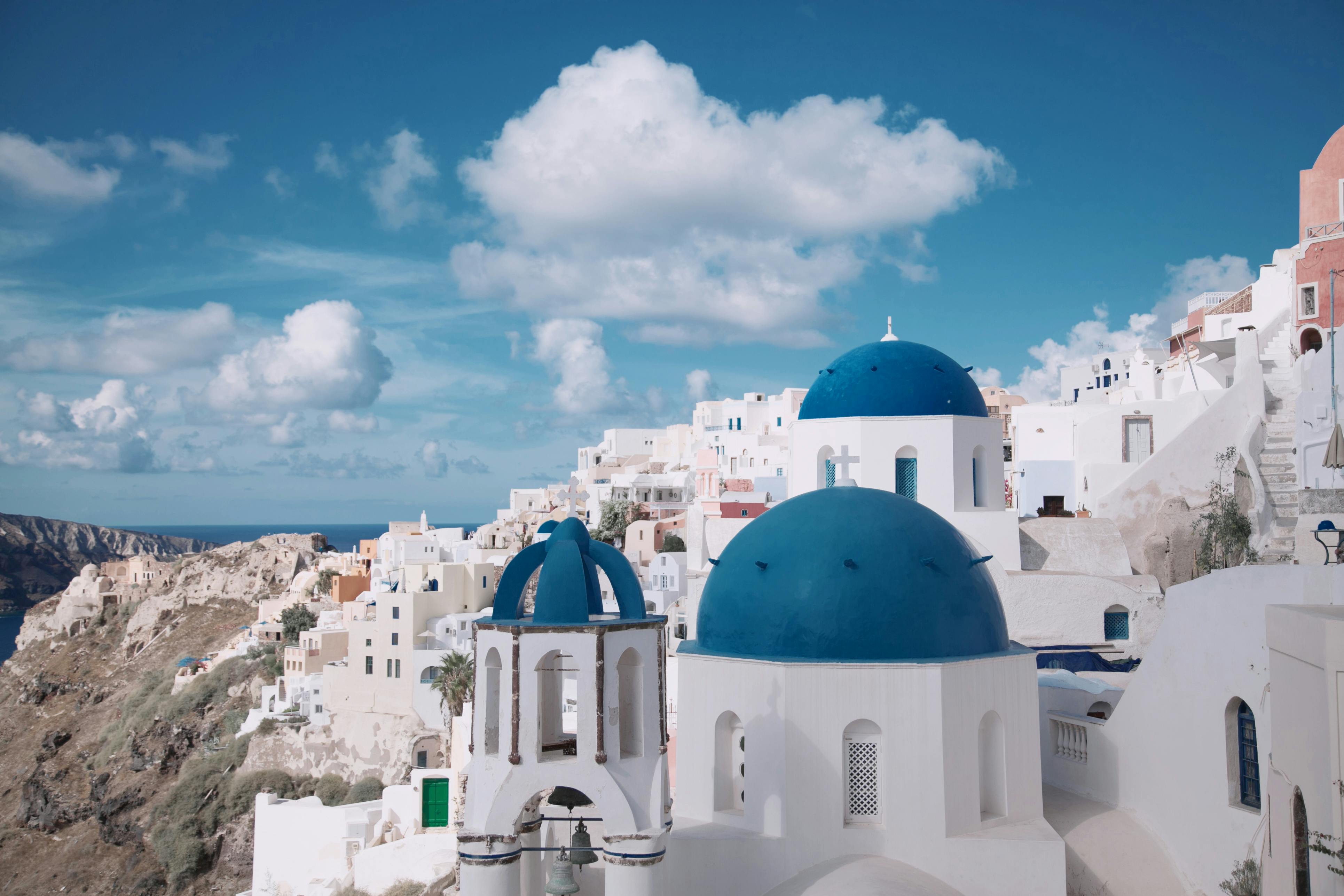
Santorini is a volcanic caldera — the rim of a volcano that exploded around 1600 BCE in one of the largest eruptions in human history, possibly destroying the Minoan civilisation on Crete and giving rise to the Atlantis legend. What’s left is a crescent of cliff-edged island, dramatically steep, with villages of white cubic houses perched above a 300-metre drop to the caldera sea below.
Oia, at the northern tip, has the famous sunset view — the orange light on the white houses and blue domes, the volcanic islands in the caldera, the 40-kilometre visibility on a clear evening. It’s relentlessly photographed and genuinely beautiful despite that. Day 5: arrive, walk the caldera path from Fira to Oia (9 km, 3–4 hours, extraordinary views). Day 6: boat tour of the caldera — swim in the naturally heated waters near the active volcanic vents, visit the Red Beach (crimson volcanic rock), and explore the ancient Minoan city of Akrotiri, buried by the 1600 BCE eruption and preserved like a Bronze Age Pompeii.
Day 7: Crete — Europe’s Oldest Civilisation
A ferry or short flight brings you to Crete, Greece’s largest island and home to the Minoan civilisation — Europe’s first advanced urban culture, flourishing 4,000–3,500 years ago. The Palace of Knossos, near Heraklion, is the largest Bronze Age archaeological site in the Aegean: multi-storey, with plumbing, fresco-decorated walls, and a complexity that stunned the archaeologist Arthur Evans when he excavated it in 1900. The Minoans had writing (Linear A, still undeciphered), indoor plumbing, and a palace economy centuries before classical Greece existed.
The Heraklion Archaeological Museum houses the finest Minoan collection in the world — the frescoes, the bull-leaping imagery, the snake goddess figurines. Crete’s own food culture (lamb, wild herbs, local olive oil, fresh cheese) is distinct from mainland Greek cuisine and exceptional. Fly home from Heraklion with a new understanding of how deep European history actually runs.
Cultural Etiquette in Greece
- Dress modestly at churches and monasteries: Shoulders and knees must be covered. Many sites provide wraps at the entrance.
- No photography inside Orthodox churches: During services, photography is typically prohibited; always ask first.
- The “moutza” gesture is deeply offensive: Holding your hand up with fingers spread (what looks like a wave) is a severe insult. Wave with a closed hand or just one finger.
- Eating times: Greeks eat late — lunch from 2:00 PM, dinner from 9:00 PM. Restaurants that open for tourists at 7:00 PM are operating for export; the best local food comes later.
- Haggling is uncommon: Unlike markets in some countries, Greek shops operate at fixed prices. Bargaining at flea markets (Monastiraki) is acceptable.
Frequently Asked Questions
What is the best way to get between Greek islands?
Ferries are the traditional and atmospheric way — the main operators are Blue Star Ferries and SeaJets. High-speed catamarans halve journey times at higher cost. Book at least a week ahead in peak season (July–August). Domestic flights (Olympic Air, Sky Express) are faster and worth considering for longer routes like Athens–Crete.
Is Santorini worth the hype?
Yes, though the hype has consequences: July–August crowds are intense and prices are very high. Visit in April–May or September–October for the same beauty at a fraction of the cost and chaos. The caldera view at sunset genuinely lives up to the photographs.
Can I visit the Acropolis without a guide?
Yes — audio guides are available for rent and the site is well-signed. A licensed guide adds significant depth to the experience, particularly for understanding the political and religious context of each structure. Pre-book tickets online to avoid the two-hour queues in high season.