
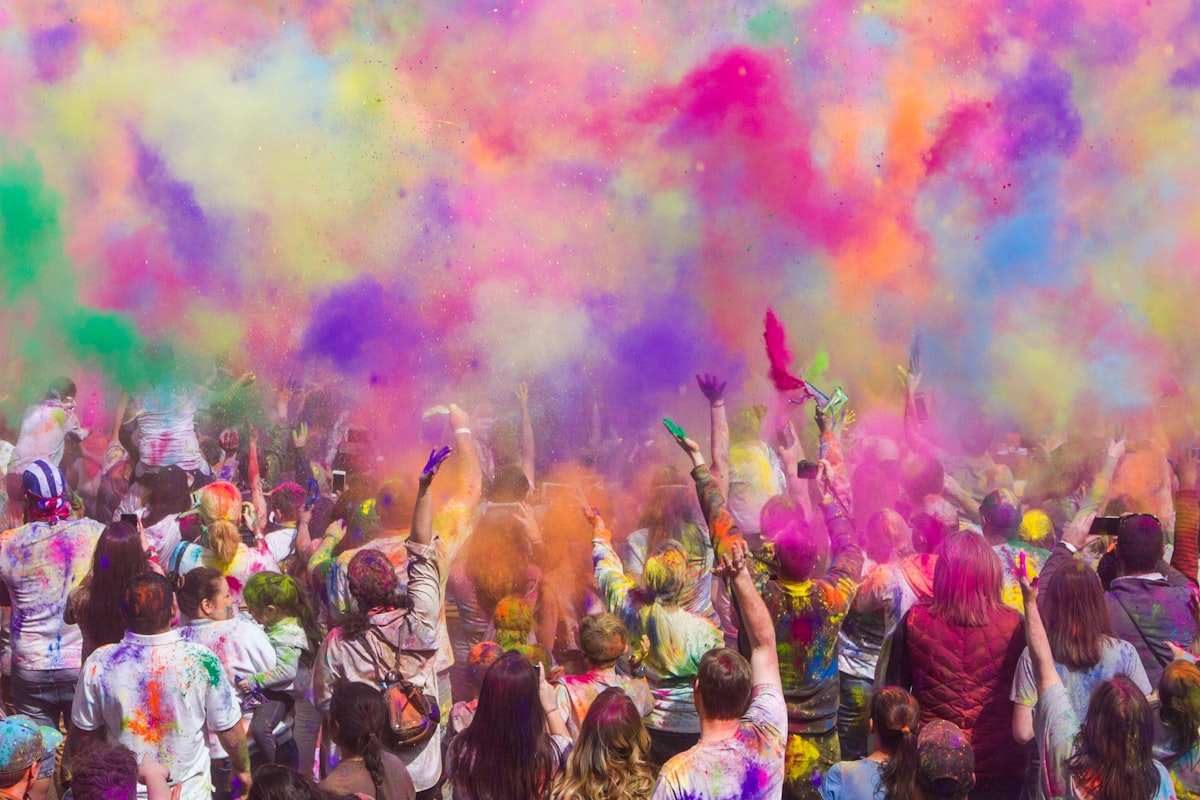
Every year, on the full moon of the Hindu month of Phalguna (February or March), the Indian subcontinent erupts in colour. Holi — the Hindu Festival of Colors — is one of the world’s most instantly recognisable celebrations: a day when strangers drench each other in vivid coloured powder and water, when social hierarchies dissolve, and when the arrival of spring is marked with an explosion of pure, uncontained joy. But Holi is far more than a colour fight. It is an ancient festival with deep roots in Hindu mythology, a celebration that tells a story about the triumph of good over evil and the eternal victory of devotion over arrogance.
The Mythology Behind Holi
Holi’s most important myth involves Prahlad, a young prince and devoted follower of Vishnu, and his father Hiranyakashipu, a demon king who demanded to be worshipped as a god. When Prahlad refused to abandon his devotion to Vishnu, his father ordered his sister Holika — who possessed a magical cloak that made her immune to fire — to sit with the boy on a bonfire. But the divine intervened: Holika’s cloak flew onto Prahlad and she burned instead, while the faithful boy emerged unharmed. The bonfire lit on the eve of Holi — called Holika Dahan — commemorates this story every year, and the coloured celebrations the following day mark Prahlad’s survival and the triumph of devotion.
A second myth connects Holi to Krishna and Radha. The young Krishna, famously blue-skinned, was jealous of Radha’s fair complexion and complained to his mother. She suggested he colour Radha’s face — and so he did, playfully smearing her with colour. This story is celebrated particularly in Mathura and Vrindavan in Uttar Pradesh, the regions most associated with Krishna, where Holi is the most elaborate and joyful of all festivals.
Holika Dahan: The Night Before
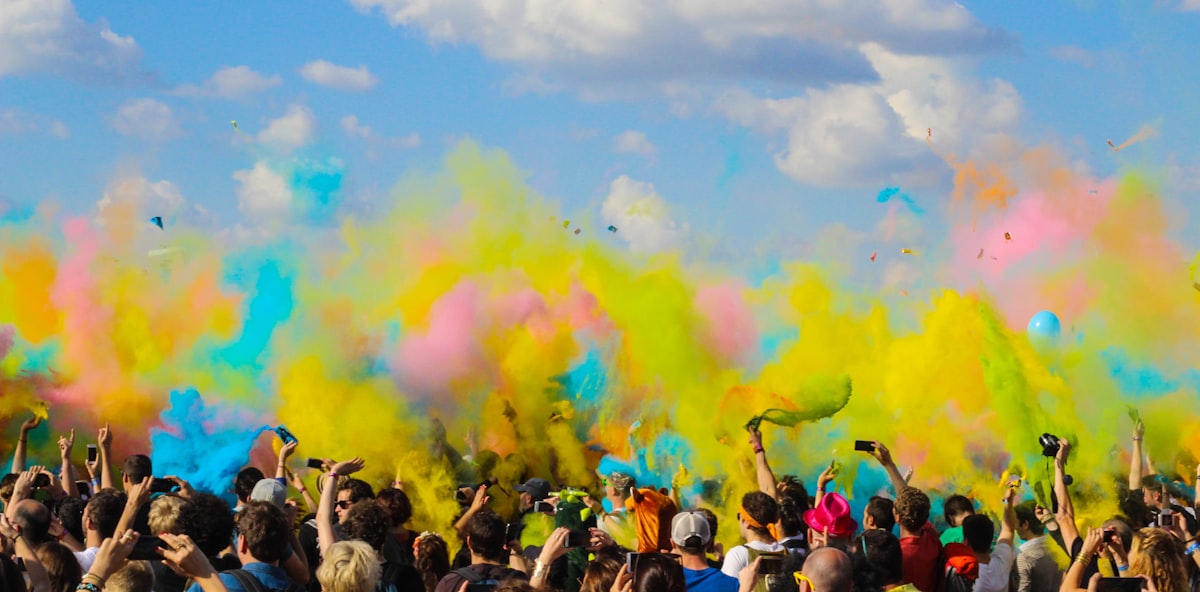
Holi is a two-day festival (Wikipedia: Holi). The first evening — Holika Dahan (also called Chhoti Holi, or “small Holi”) — is a solemn ritual in which communities build bonfires representing the burning of Holika. People gather around the fire, perform religious rituals, and pray for the victory of good over evil. In many communities, people circle the bonfire three times and throw offerings of grain, coconut, and popcorn into the flames.
Rangwali Holi: The Day of Colors
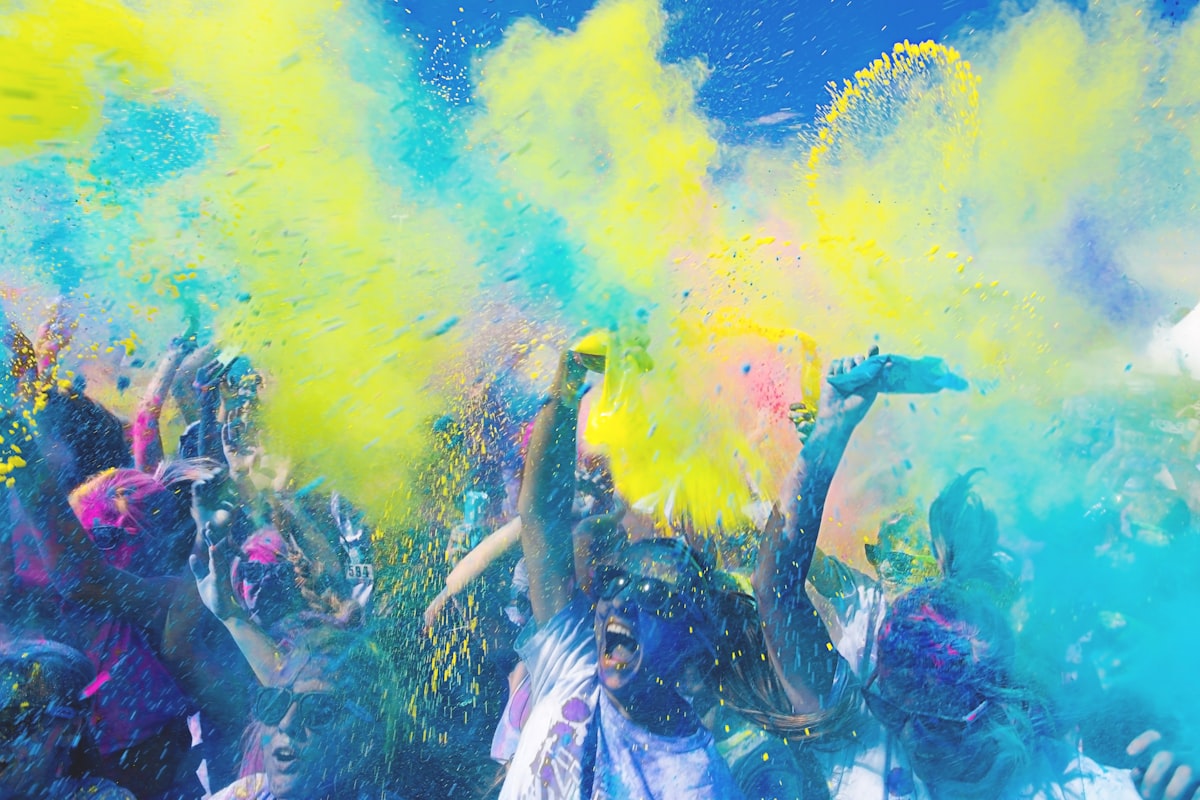
The following morning — Rangwali Holi — the country transforms. The coloured powder used in Holi is called gulal, traditionally made from flowers and plants (though synthetic versions dominate today). People take to the streets, parks, and open spaces to smear, throw, and spray colour at anyone in reach. Water balloons, water guns (pichkaris), and buckets of coloured water escalate the chaos.
Crucially, Holi temporarily dissolves the social hierarchies that define daily Indian life. For one day, distinctions of caste, class, age, and gender blur. The festival’s motto — Bura na mano, Holi hai (“Don’t take offence, it’s Holi!”) — gives licence for playful transgressions that would be unthinkable on any other day.
Regional Variations Across India
- Mathura and Vrindavan (Uttar Pradesh): The most elaborate Holi in India, celebrated for 16 days, centred on Krishna’s homeland
- Barsana (Uttar Pradesh): Lathmar Holi — women beat men with sticks while men try to shield themselves, re-enacting Krishna’s teasing of Radha
- Purulia (West Bengal): Basanta Utsav — a more musical and dance-centred celebration with heavy Rabindranath Tagore influence
- Manipur: Yaosang — a five-day festival combining traditional Holi with local Meitei cultural practices
- Punjab: Hola Mohalla — a Sikh martial arts festival held the day after Holi at Anandpur Sahib
Holi Around the World
As the Indian diaspora has spread globally, Holi has followed. Today, large Holi celebrations are held in New York, London, Sydney, Toronto, Amsterdam, and dozens of other cities. Beyond the diaspora, “colour run” events inspired by Holi have become popular worldwide, introducing the festival’s visual spectacle — if not always its cultural depth — to millions of new participants.
Frequently Asked Questions
When is Holi 2026?
Holi 2026 falls on March 3 (Holika Dahan) and March 4 (Rangwali Holi). The date changes each year as it follows the Hindu lunar calendar, falling on the full moon of the month of Phalguna.
What colours are used in Holi?
All colours are used in Holi. Traditionally, each colour carried symbolic meaning: red for love and fertility, blue for Krishna, yellow for turmeric (health and healing), green for spring and new beginnings. Today, commercially produced gulal powder comes in every colour imaginable.
Is Holi safe to attend as a tourist?
Yes, with preparation. Wear old white clothes (colour shows beautifully on white), apply oil to your skin and hair to make powder easier to remove, protect your camera in a waterproof bag, and stay in public open spaces with crowds. Solo female travellers may prefer to celebrate with organised events or as part of a group.
Holi is proof that joy itself can be a tradition — that an ancient religious festival can speak across centuries and cultures through something as simple and universal as colour. Explore more cultural traditions from around the world on CulturalDiaries.
One response to “Holi: The Hindu Festival of Colors — History, Meaning and How It’s Celebrated”
[…] tradition they belong to. For broader context on Hindu and Buddhist culture, see our guides to Holi in India and Bhutan’s Buddhist […]