
It is the most recognised man-made structure on Earth — a wall that stretches, in its various sections, for over 21,000 kilometres across the mountains, deserts, and plains of northern China. But the Great Wall of China is not one wall, built at one time, for one purpose. It is an accumulation of walls, built over two thousand years by multiple dynasties, using different materials, different methods, and different intentions. To understand the Great Wall is to understand something essential about Chinese civilisation: its ambition, its continuity, its relationship with the outside world, and the extraordinary human cost of its most enduring achievements.
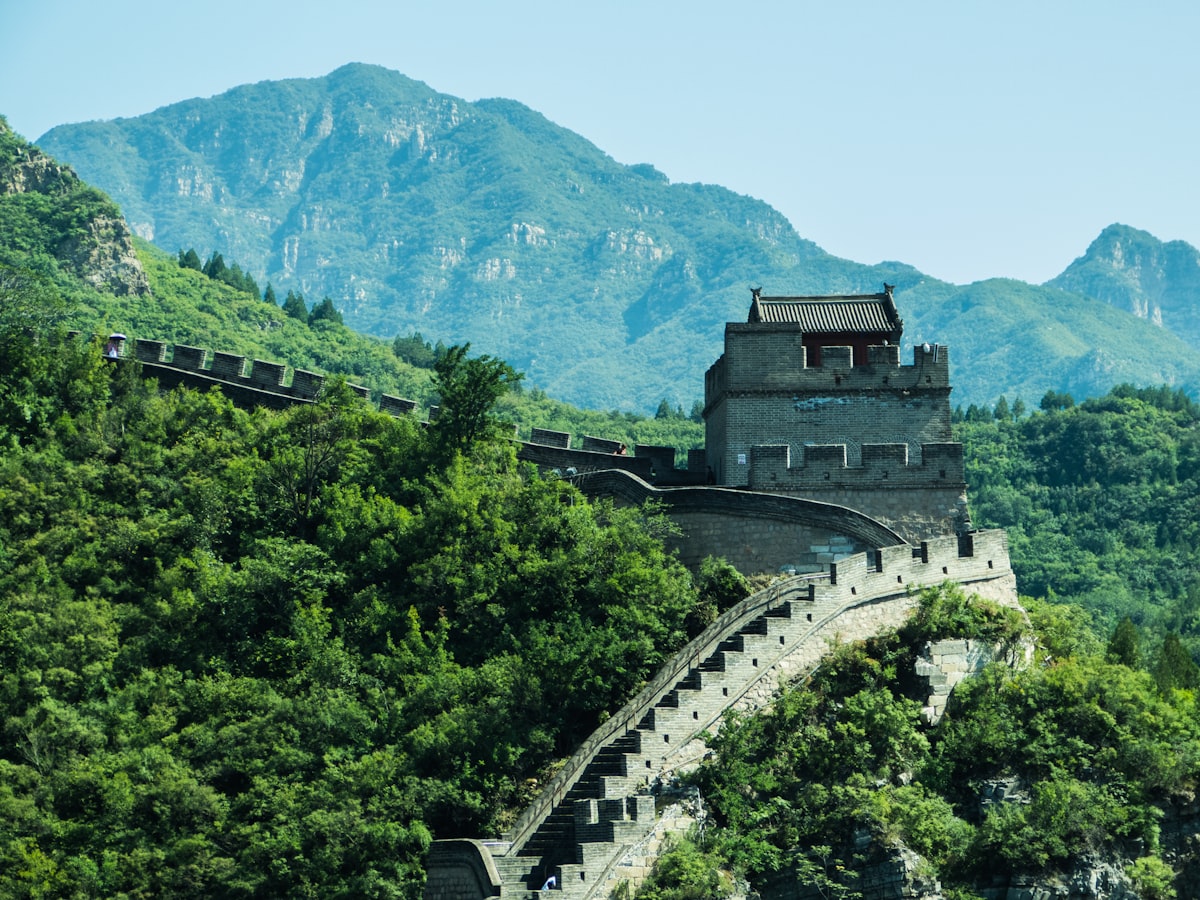
2,000 Years of Wall-Building
The story of the Great Wall begins not with a single emperor but with a problem: the northern frontier. For centuries, the settled agricultural civilisations of China faced a fundamental challenge from the nomadic peoples of the steppes to the north — the Xiongnu, the Mongols, the Jurchen — who possessed a military mobility that Chinese armies found difficult to match. The answer, developed over centuries, was the wall: a defensive system that funnelled movement, signalled threats, and provided a physical boundary between two fundamentally different ways of life.
The first walls were built during the Warring States period (475–221 BCE), when individual Chinese kingdoms built walls to defend their borders against each other and against northern raiders. When Qin Shi Huang unified China in 221 BCE and became its first emperor, he commanded the connection and extension of these existing walls into a continuous barrier — this is the origin story most often cited for the Great Wall, though the scale of the Qin construction was far more modest than the wall that exists today.
The Han Dynasty: Expansion into the Desert
The Han Dynasty (206 BCE–220 CE) substantially extended the wall westward into the Gobi Desert, reaching as far as what is now the Hexi Corridor in Gansu province. Han wall construction used materials suited to the desert environment: rammed earth mixed with reeds and tamarisk branches — a technique so effective that sections of Han walls survive today despite being 2,000 years old. The Han wall was as much a corridor as a barrier, facilitating the movement of troops, goods, and information along what would become the Silk Road.

The Ming Dynasty: The Wall We See Today
The Great Wall that most visitors experience today — the dramatic brick-and-stone fortification that snakes across mountain ridges near Beijing — is almost entirely a product of the Ming Dynasty (1368–1644 CE). Having expelled the Mongols in 1368, the Ming emperors were acutely aware of the threat from the north and invested enormous resources in building the most sophisticated defensive system in Chinese history.
Ming wall construction used kiln-fired bricks and cut stone, creating a structure of far greater permanence and sophistication than earlier rammed-earth walls. The wall was equipped with watchtowers every 300–500 metres (allowing signal fires to relay messages across hundreds of kilometres in hours), fortified garrison towns, and a complex logistical infrastructure. At its height, the Ming wall system was garrisoned by nearly one million soldiers.
The Human Cost: Who Built the Wall?
The Great Wall was built through one of history’s largest organised labour efforts. During the Qin Dynasty’s initial construction phase, an estimated 300,000 to 500,000 workers were conscripted — soldiers, peasants, prisoners, and convicts. During the Ming Dynasty’s massive rebuilding programme, it is estimated that between 800,000 and one million workers were employed at any given time over the course of two centuries.
The conditions were brutal. Workers in remote mountain sections had to haul construction materials up near-vertical slopes without mechanisation. Food and water were scarce. Diseases spread rapidly in the labour camps. Historians estimate that hundreds of thousands — possibly millions — of workers died during the wall’s construction over its full history. A Chinese saying captures this history bleakly: “Every stone in the Great Wall cost a human life.”
Did the Great Wall Actually Work?
The honest answer is: not as a military barrier. The Mongols and Jurchen repeatedly breached or circumvented the wall. When the Manchu forces toppled the Ming Dynasty in 1644, they did not smash through the wall — they were let through a gate by a Chinese general. The wall’s military value was always limited by the simple fact that a wall is only as strong as the troops defending it.
Yet to judge the wall purely on military terms is to miss its deeper significance. The wall functioned as an immigration and customs control system, regulating the movement of peoples and goods across the frontier. It served as a communication network, relaying military intelligence across vast distances. It provided employment and economic activity along the frontier. And it served as a powerful statement of imperial ambition and civilisational identity — a line drawn in stone between China and everything that was not China.
Best Sections to Visit
- Mutianyu: Best-preserved Ming section near Beijing, less crowded than Badaling, accessible via cable car
- Jinshanling: Partially restored, dramatic mountain scenery, popular with photographers — especially at dawn
- Simatai: Night tours available; some sections deliberately left unrestored for authenticity
- Badaling: Most accessible and most visited (10 million visitors/year); heavily restored and very crowded — visit early or in winter
- Jiayuguan: The western terminus of the Ming wall in Gansu province — far less visited, historically significant as the “Last Pass Under Heaven”
Frequently Asked Questions
Can you see the Great Wall from space?
No — this is one of history’s most persistent myths. The Great Wall is very long but only 4–8 metres wide, making it far too narrow to be visible with the naked eye from space. Multiple astronauts, including Chinese astronaut Yang Liwei, have confirmed they could not see it from orbit.
How long is the Great Wall of China?
A 2012 archaeological survey by China’s State Administration of Cultural Heritage found that all walls built across all dynasties combined measure approximately 21,196 kilometres. The Ming Dynasty wall alone is approximately 8,850 kilometres.
Is the Great Wall a UNESCO World Heritage Site?
Yes. The Great Wall was inscribed on the UNESCO World Heritage List in 1987, recognised as “the greatest architectural feat in history” and a testament to the power of human organisation and determination over two millennia.
The Great Wall is not a ruin. It is a record — of ambition and fear, of labour and loss, of a civilisation’s determination to define itself against the world. Standing on its battlements and looking north toward the steppe horizon, you feel the weight of that history directly. Explore more history and culture stories on CulturalDiaries.