
In the mountains of southern Mexico, a city of 300,000 people preserves more pre-Columbian cultural traditions, more indigenous languages, more ancient culinary practices, and more archaeological wonders than almost anywhere else in Latin America. Oaxaca — the state and its capital city of the same name — is one of Mexico’s most culturally extraordinary destinations: a place where 16 distinct indigenous groups continue to maintain their languages, traditions, and cosmologies alongside a creative contemporary arts scene that has made it one of the world’s most important centres for textile, ceramic, and visual art. For food lovers, Oaxaca is simply indispensable: its cuisine, built on 3,000 years of indigenous culinary tradition, is arguably the most complex and varied in all of Mexico.
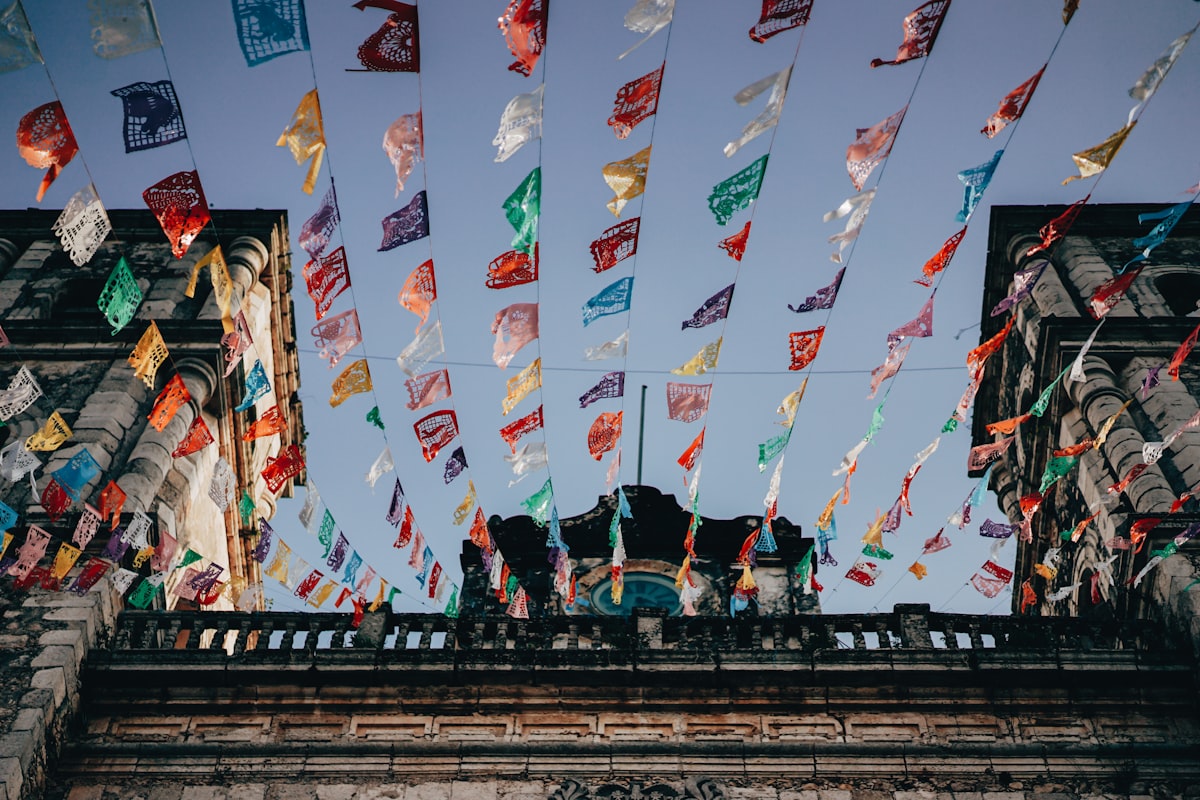
The Ancient Foundations: Zapotec and Mixtec Civilisations
Long before the Spanish arrived, the Valley of Oaxaca was home to one of Mesoamerica’s first complex civilisations: the Zapotec. The Zapotec established Monte Albán — one of the earliest cities in the Americas — around 500 BCE on an artificially levelled mountain top overlooking the valley. At its height (roughly 400 BCE to 700 CE), Monte Albán had a population of approximately 25,000 people and served as the political and ceremonial centre of a state that controlled much of the Oaxacan region. The site contains pyramids, temples, tombs, a proto-astronomical observatory, and a ball court — evidence of a sophisticated civilisation that independently developed writing, a calendar system, and urban planning.
After Monte Albán’s decline around 700 CE, the Mixtec — another indigenous group from the mountains of western Oaxaca — rose to prominence, producing extraordinary achievements in metalwork (particularly goldsmithing), manuscript-making (the Mixtec codices are among the finest pre-Columbian documents in existence), and ceramic art. The intersection and occasional conflict between Zapotec and Mixtec cultures produced one of the richest archaeological records in the Americas — still being excavated today.
Oaxacan Cuisine: The Most Complex Food Culture in Mexico
Oaxacan cuisine is often described as the most complex in Mexico — which, given the extraordinary variety of Mexican cooking, is a significant claim. It is a cuisine built on pre-Columbian indigenous traditions that survived and evolved through Spanish colonisation, producing a food culture of extraordinary depth, variety, and regional specificity. The most famous elements include:
- Mole: Oaxaca is famous as “the land of seven moles” — the seven classic sauce preparations that define Oaxacan cooking. Negro (the most complex, with over 30 ingredients including multiple chillies, chocolate, and spices), colorado, amarillo, rojo, verde, coloradito, and chichilo. Each has its own specific application, season, and cultural context. Mole negro — the darkest and most elaborate — is served at weddings and major celebrations.
- Mezcal: While tequila is made from a single blue agave variety in Jalisco, mezcal can be made from any of dozens of agave species — and Oaxaca produces approximately 85% of Mexico’s mezcal. Oaxacan mezcal culture is ancient, ceremonial, and deeply regional: different villages produce mezcals with distinct characters from specific agave varieties that may take 15-30 years to mature.
- Tlayuda: The staple of Oaxacan street food — a large, crunchy toasted tortilla (50cm diameter) spread with black bean paste, asiento (unrefined pork fat), quesillo (Oaxacan string cheese), and various toppings. It is eaten folded in half and is more a complete meal than a snack.
- Chapulines: Toasted grasshoppers seasoned with chilli, lime, and salt — one of the most ancient protein sources in the Oaxacan diet and still eaten with enthusiasm across the state. Available in the Benito Juárez market, where they are sold by the kilo in various spice preparations.
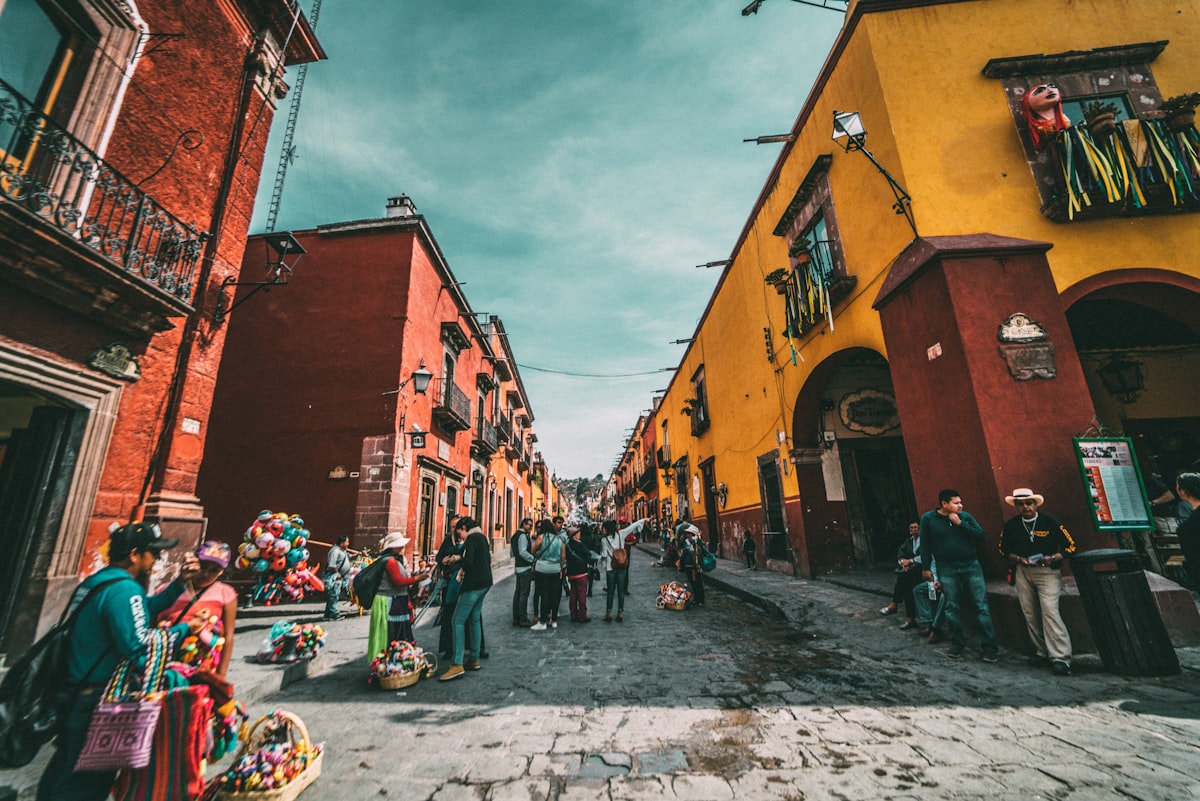
Día de los Muertos in Oaxaca
While Día de los Muertos is celebrated throughout Mexico, Oaxaca’s version is widely considered the most authentic and most moving expression of the tradition. The celebrations centre on the cemeteries of San Andrés Huayapam, Atzompa, Xoxocotlán, and Etla — where families gather from dusk on October 31 through the night of November 2, covering graves with cempasúchil (marigolds), candles, food, and photographs of the deceased. The scale and atmosphere of Oaxacan cemetery celebrations — tens of thousands of candles illuminating graves decorated with elaborate floral arrangements, while families eat, drink, and play music beside their dead — is one of the most profound cultural experiences in the Americas.
Indigenous Crafts: Textile, Ceramic, and Wood Art
Oaxaca’s 16 indigenous groups maintain extraordinary craft traditions that are both artistically significant and economically vital. The most celebrated include:
- Zapotec textiles: The village of Teotitlán del Valle has been producing wool carpets and tapestries using pre-Columbian backstrap loom techniques and natural dyes (cochineal for red, indigo for blue, marigold for yellow) for at least 2,000 years. Individual families maintain design traditions passed from generation to generation.
- Alebrijes: Fantastical carved and painted wooden animal figures from the Sierra Norte villages of Arrazola and San Martín Tilcajete — a 20th-century art form (created by Pedro Linares in the 1930s) that has become one of Oaxaca’s most recognisable visual exports.
- Black clay ceramics (Barro Negro): The village of San Bartolo Coyotepec produces the distinctive black burnished clay ceramics that are one of Oaxaca’s most recognisable crafts — an ancient tradition refined in the 20th century by Doña Rosa Real de Nieto, who developed the distinctive burnishing technique that gives the pieces their characteristic metallic sheen.
Frequently Asked Questions
When is the best time to visit Oaxaca?
October-November for Día de los Muertos (the most culturally immersive experience Oaxaca offers); July for the Guelaguetza festival (a celebration of Oaxacan indigenous dance and music held on the last two Mondays of July); December for Las Posadas and the Night of Radishes (December 23 — a unique Oaxacan tradition of carving scenes in giant radishes). The dry season (November-April) offers the most reliable weather.
Is Oaxaca safe for tourists?
Oaxaca City and its immediate surroundings are generally considered safe for tourists by Mexican standards. The city has a large international visitor population and a well-developed tourism infrastructure. Standard urban safety precautions apply. Check current government travel advisories for the Oaxacan coast and more remote regions before travelling.
Oaxaca is proof that the places with the deepest roots produce the most extraordinary culture. Explore more hidden destinations on CulturalDiaries.