
The world’s most culturally rich cities share a quality that goes beyond the number of museums or monuments: they have layers — archaeological, historical, artistic, culinary, and contemporary — that reward every depth of engagement. You can spend a day or a year in these cities and still find something new. These are the 15 cities where culture is not a department but a way of life.
1. Rome — 2,800 Years of Unbroken History
Rome has been continuously inhabited and culturally significant for 2,800 years — longer than almost any other major city on Earth. Every layer of Western civilisation is physically present: Etruscan foundations, Roman monuments, early Christian catacombs, Byzantine mosaics, Renaissance masterpieces, Baroque fountains, Fascist architecture, and contemporary design all exist within walking distance. The density of cultural significance per square kilometre in Rome’s historic centre is unmatched anywhere. The Colosseum alone — surrounded by the Forum, Palatine Hill, and Circus Maximus within 500 metres — represents 2,000 years of continuous human drama.
2. Kyoto — The City That Preserved Japanese Culture
Kyoto was Japan’s imperial capital for 1,075 years (794–1868) and the custodian of Japanese high culture throughout that period. It has 17 UNESCO World Heritage Sites within the city limits, 400+ Shinto shrines, 1,600+ Buddhist temples, and the world’s finest concentration of traditional Japanese arts: tea ceremony, ikebana flower arranging, Nishiki textile weaving, Kodo incense ceremony, and Kado (the way of flowers). Unlike Tokyo’s modernity, Kyoto’s cultural identity is rooted in the pre-modern — and consciously maintained as such.
Best time to visit Kyoto
Cherry blossom season (late March–early April) and autumn foliage (mid-November) are the peak cultural seasons. Both involve extraordinary visual beauty but also large crowds. For the most immersive experience with fewer crowds: February (Setsubun festivals) and late May (mild weather, early summer greenery).
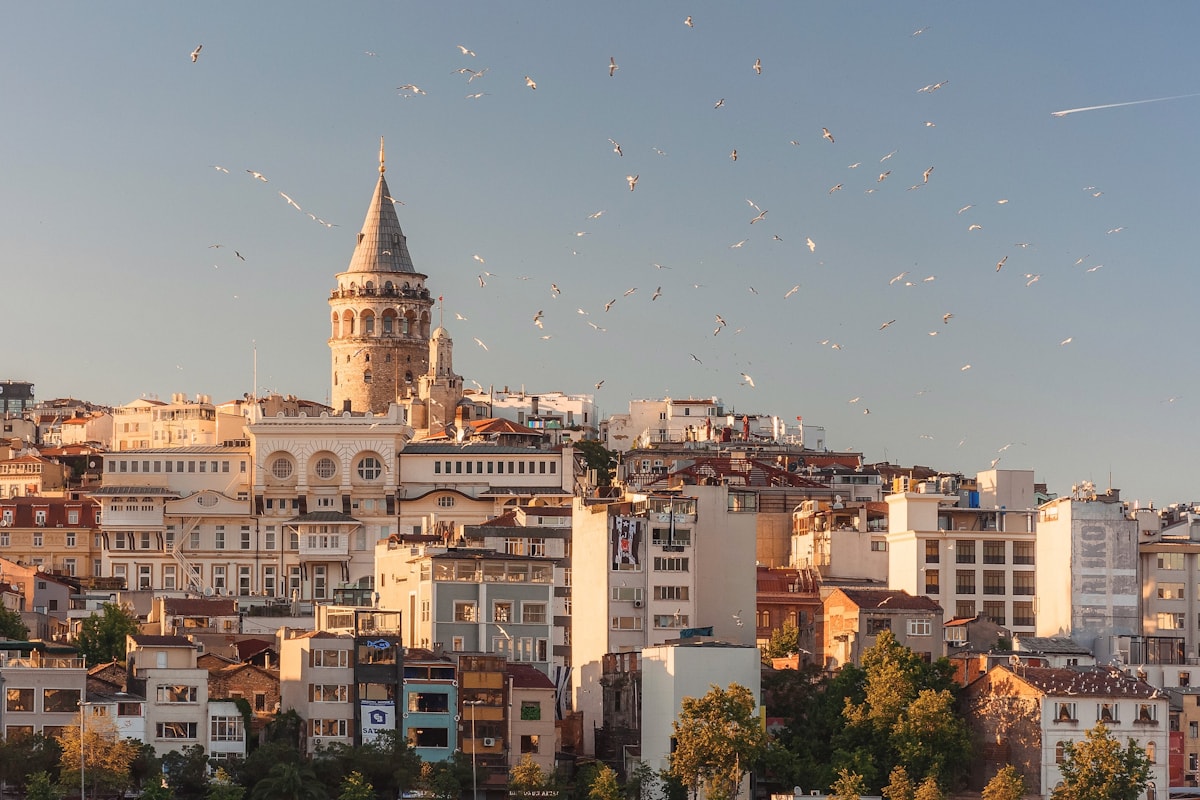
3. Istanbul — The City of Three Empires
No city on Earth has been the capital of more civilisations than Istanbul: the Byzantine Empire (330–1453 AD) and the Ottoman Empire (1453–1922 AD), both of which were among history’s most culturally sophisticated. The result is a city where 6th century mosaics and 16th century tilework coexist on the same building, where the call to prayer echoes off Byzantine walls, and where European and Asian cultures are literally connected by a 1.5km bridge. Istanbul’s food, music, architecture, and social culture remain among the world’s most distinctive and rewarding.
4. Paris — The City That Invented the Modern Museum
Paris’s cultural infrastructure is unrivalled: the Louvre (the world’s largest art museum, 35,000 objects on display from 36,000+ in collection), the Musée d’Orsay (finest Impressionist collection), Centre Pompidou, Rodin Museum, and 130+ other museums. But Paris’s cultural richness extends beyond institutions: its café culture, its fashion history, its literary geography (every street has a writer’s story), its cinema tradition (the French New Wave changed global film), and its food culture (the only national cuisine on UNESCO’s Intangible Heritage list). Paris deserves its reputation — but so does its less-visited side: the 11th arrondissement’s contemporary art scene, the 13th’s Asian cultural community, and the Marais’s Jewish heritage.
5. Marrakech — The World’s Greatest Medina
Marrakech’s ancient medina is a UNESCO World Heritage city in active daily use — 150,000 people live and work within its medieval walls in a city plan essentially unchanged since the 11th century. The Djemaa el-Fna square (UNESCO’s first ‘intangible’ heritage designation) is the world’s largest open-air performance space: storytellers, musicians, snake charmers, and acrobats performing simultaneously for 18 hours a day. Bahia Palace, Majorelle Garden, and the souk network behind the square represent Morocco’s finest artistic traditions in physical form.
6. Varanasi — The World’s Oldest Continuously Inhabited City
Varanasi (Benares) has been continuously inhabited since at least 1200 BC — making it one of the world’s oldest living cities. As the holiest city of Hinduism, it is the destination where Hindus come to die — cremation on the Ganges ghats is believed to guarantee moksha (liberation from the cycle of rebirth). The morning boat ride along the ghats — past the cremation fires, the bathing pilgrims, the flower offerings, and the ancient stone steps — is one of the most profound cultural experiences available anywhere. Mark Twain called it ‘older than history, older than tradition, older even than legend.’
7. Athens — Where It All Began
Athens is culturally significant beyond any reasonable proportion to its modern size: democracy, philosophy, tragedy, comedy, the Olympic Games, the concepts of history and geography — all originated within a 2km radius of the Acropolis. The Acropolis Museum (opened 2009) is one of the world’s finest archaeological museums — displaying the Parthenon marbles in context with the monument visible through the museum’s glass walls. The combined effect of visiting the Acropolis, the Agora, and the museum in a single day is unlike any other historical experience.
Frequently Asked Questions
What is the most culturally rich city in the world?
Rome, Kyoto, Istanbul, and Athens are most frequently cited by cultural historians and UNESCO as the world’s most culturally significant cities. For a visitor, Kyoto (17 UNESCO sites in one city) and Istanbul (the only city to have been capital of two major world empires) offer the highest density of accessible cultural depth.
Which city has the most UNESCO World Heritage Sites?
No single city has more UNESCO-listed sites than Kyoto (17 sites), though the list is classified as a single inscription. Rome and Istanbul each have their historic centres inscribed as single sites. In terms of countries: Italy has 58 UNESCO sites nationally.
Which is the best culturally rich city to visit on a budget?
Athens offers extraordinary cultural depth at relatively low cost — major archaeological sites are cheaper than equivalent Western European attractions. Marrakech is excellent value. Istanbul is significantly cheaper than it was pre-2020 due to currency changes, making it one of the world’s best value culturally rich cities. Varanasi is extremely affordable and unparalleled in cultural intensity.
Explore More on CulturalDiaries.com
Discover more festivals, cultures, and travel guides from around the world — your definitive guide to global culture.