
A Swiss pharmaceutical company once prepared patient leaflets in Pakistan using green, white, and black — colours associated with the Muslim faith — for medical warning labels, causing genuine offence. In China, red means happiness; in South Africa, it means mourning. In the West, white means weddings; in Japan, it means funerals. The cultural meaning of colors is one of the most pervasive and most underestimated areas of cross-cultural misunderstanding. Colour is a language — deeply embedded in each culture’s mythology, religion, history, and shared aesthetic — and like all languages, its grammar must be learned.
Red: Luck, Love, Danger — Depending Where You Are
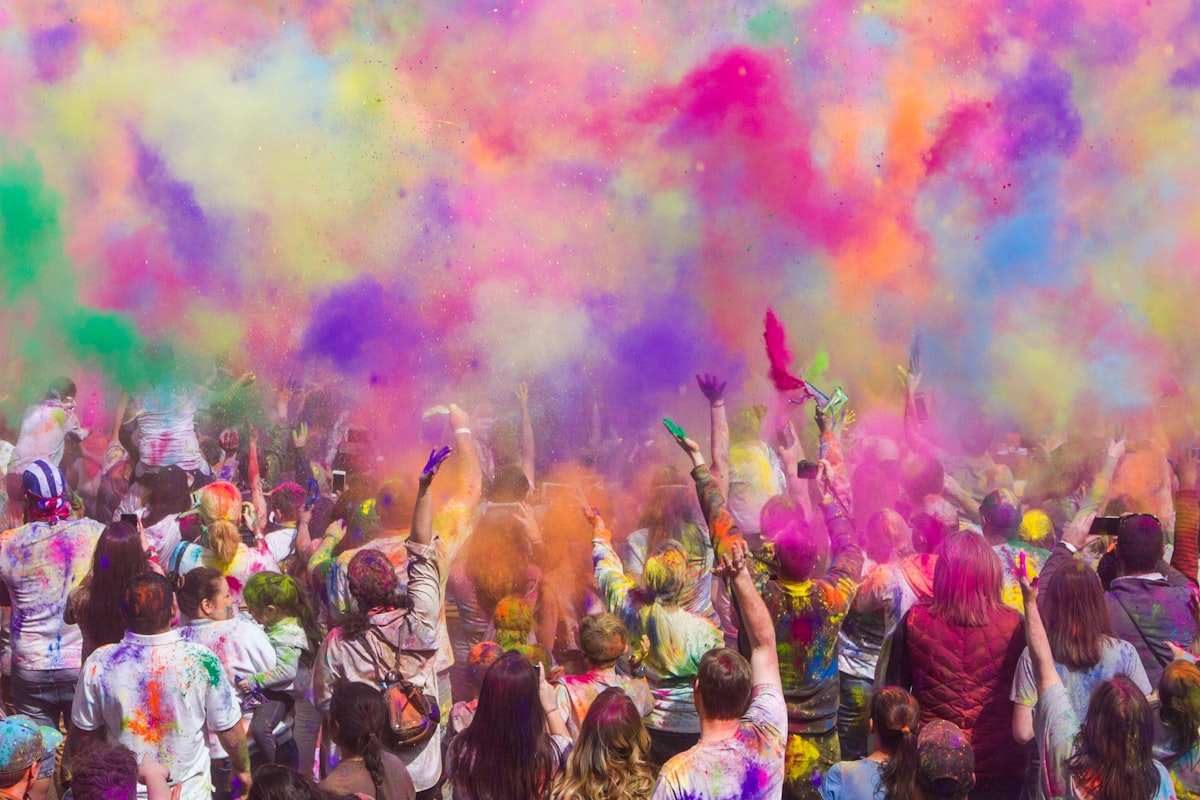
No colour generates more varied cultural responses than red. In China, red is the colour of luck, prosperity, and celebration — brides wear red, red envelopes contain money gifts, and New Year celebrations explode in red paper and fireworks. In India, red is marriage and fertility; a bride’s sindoor (the red powder applied to her hair parting) marks her marital status throughout her life. In Russia, the word for red (krasny) historically also meant “beautiful” — Red Square translates directly as Beautiful Square. Meanwhile in Western cultures, red signals danger (red traffic lights, red warning signs) and urgency while simultaneously representing romance on Valentine’s Day. In parts of South Africa, red is the colour of mourning in certain tribal traditions.
White: Purity and Death — Often in the Same Country
White’s Western association with weddings and purity — popularised by Queen Victoria’s 1840 white wedding dress — is a minority global position. In China, Japan, and Korea, white is the primary colour of mourning; white flowers, white clothing, and white envelopes are funeral symbols. In India, widows traditionally wore white as a symbol of social withdrawal. In Ghana, white can represent joy and victory. In the Arab world, white represents purity and peace — and the Ihram (pilgrim garments for Hajj) are white, symbolising equality before God. The same colour means opposite things in cultures separated by thousands of kilometres — and sometimes within the same country.
Black: Elegance, Power, and Grief
Black’s negative associations (death, evil, darkness) are widespread but not universal. In Western cultures, black simultaneously represents mourning and sophistication — worn to funerals and to the most formal occasions. “Little black dress” elegance coexists with “black market” criminality and “black magic.” In West Africa, black paint or scarification marks adult men and warriors with maturity and strength. In Japan, black (kuro) historically represented experience, formality, and prestige — black kimono are worn for formal ceremonies. In Mesoamerican civilisations, black was associated with obsidian (the material of sacrificial knives) and the underworld — a genuinely negative association.
Yellow and Gold: Imperial Power and Jealousy
In Imperial China, yellow was the exclusive colour of the Emperor — forbidden to commoners under penalty of death. The Forbidden City’s yellow glazed tiles marked it as the Emperor’s domain. In Buddhist Southeast Asia, saffron yellow is the colour of monastic robes and carries profound spiritual associations — monks take colour literally: putting on the robe is an act of renunciation and commitment. In Germany and France, yellow is associated with jealousy (German: “gelb vor Neid” — yellow with envy). In Egypt and parts of the Middle East, yellow flowers are associated with mourning. In the United States, yellow schoolbuses and taxicabs exploit the colour’s maximum visibility.
Blue: The Divine and the Depressed
In India, blue is the colour of divinity — Krishna, Vishnu, and Shiva are depicted with blue skin marking their divine nature. The Blue City of Jodhpur, where Brahmin houses were traditionally painted blue, and the extraordinary blue tilework of Rajasthani palaces reflect this sacred association. In Turkey and Greece, the deep cobalt of the “evil eye” (nazar) bead protects against malicious envy — blue doors and amulets ward off the evil eye across the eastern Mediterranean. In Iran and Central Asia, the extraordinary turquoise and lapis lazuli blues of mosque tilework represent heaven. In Western cultures, blue means sadness (“feeling blue”), trust (corporate blue — IBM, Ford, Samsung), and, in a recent historical quirk, masculinity (blue for boys became standard only in the mid-20th century, reversing a previous convention where pink was the stronger, more masculine colour).
Green: Sacred, Jealous, and Forbidden
In Islam, green is the sacred colour — the Prophet Muhammad’s cloak, the colour of paradise, and the dominant colour on the flags of most Muslim-majority nations. The green dome of the Prophet’s Mosque in Medina is one of Islam’s most recognisable symbols. In Ireland, green is national identity — the Emerald Isle, St. Patrick’s Day, the shamrock. In China, green has a striking negative connotation: wearing a green hat (戴绿帽子, dai lümao zi) indicates that a man’s wife is unfaithful — making green hats essentially unwearable in Chinese social contexts. In Indonesia, green is traditionally considered bad luck in parts of Java. In Western cultures, green means nature, environmental consciousness, envy (“green with envy”), and the go signal — entirely positive except for the envy.
Purple: Royal, Spiritual, and Mourning
Purple’s global association with royalty has genuine historical roots. Tyrian purple — produced from the mucus of Murex sea snails in ancient Phoenicia — required approximately 250,000 snails per ounce of dye, making it more valuable than gold. Only the extremely wealthy could afford purple garments; Roman emperors legislated their exclusive right to wear it. This historical scarcity established purple’s royal associations across cultures from Rome to Byzantium. In Thailand, purple represents mourning — widows wear purple after their husband’s death. In Brazil, purple is associated with death and is therefore avoided in packaging and advertising. In Japan, purple (murasaki) represents the refinement of the Heian imperial court and has strongly positive, aristocratic connotations.
Orange: Revolution, Buddhism, and Beware
Orange is the most politically charged colour in several contemporary contexts: it is the colour of the Netherlands (the House of Orange), making it the patriotic colour of Dutch identity. In Ukraine, orange was the colour of the 2004 Orange Revolution — a pro-democracy uprising that changed the country’s political trajectory. In India’s Hindu nationalism, saffron orange has become closely associated with the BJP and Hindutva political movement — making it simultaneously a sacred religious colour and an intensely political one. For Theravada Buddhism, the saffron orange robe worn by monks in Thailand, Myanmar, Cambodia, and Sri Lanka is the most immediately recognisable symbol of the religion worldwide.
Frequently Asked Questions
Are colour meanings universal or cultural?
The perception of colour is physiological and universal — human eyes see the same electromagnetic spectrum worldwide. But the categorisation, naming, and cultural meaning of colour is highly variable. The number of basic colour terms varies from 2 to 11 across different languages. Japanese traditionally did not distinguish blue (ao) from green (midori) as separate basic colour categories. The Pirahã people of Brazil have no distinct words for red and yellow. Cultural colour meaning is learned — not innate.
What colours should you avoid giving as flowers in different cultures?
White flowers symbolise death and mourning in China, Japan, and Korea — avoid as gifts unless for a funeral. Yellow flowers mean jealousy or infidelity in Russia, France, and some Latin American countries. Red flowers are appropriate for romantic partners but may be inappropriate for business contexts. In India, giving marigolds alone (without other flowers) can be associated with funerals. When uncertain, multicoloured mixed bouquets are the safest cross-cultural choice.
Understanding colour is understanding culture — and every colour is a window into the values, history, and imagination of the people who chose it. Explore more cultural traditions on CulturalDiaries.