
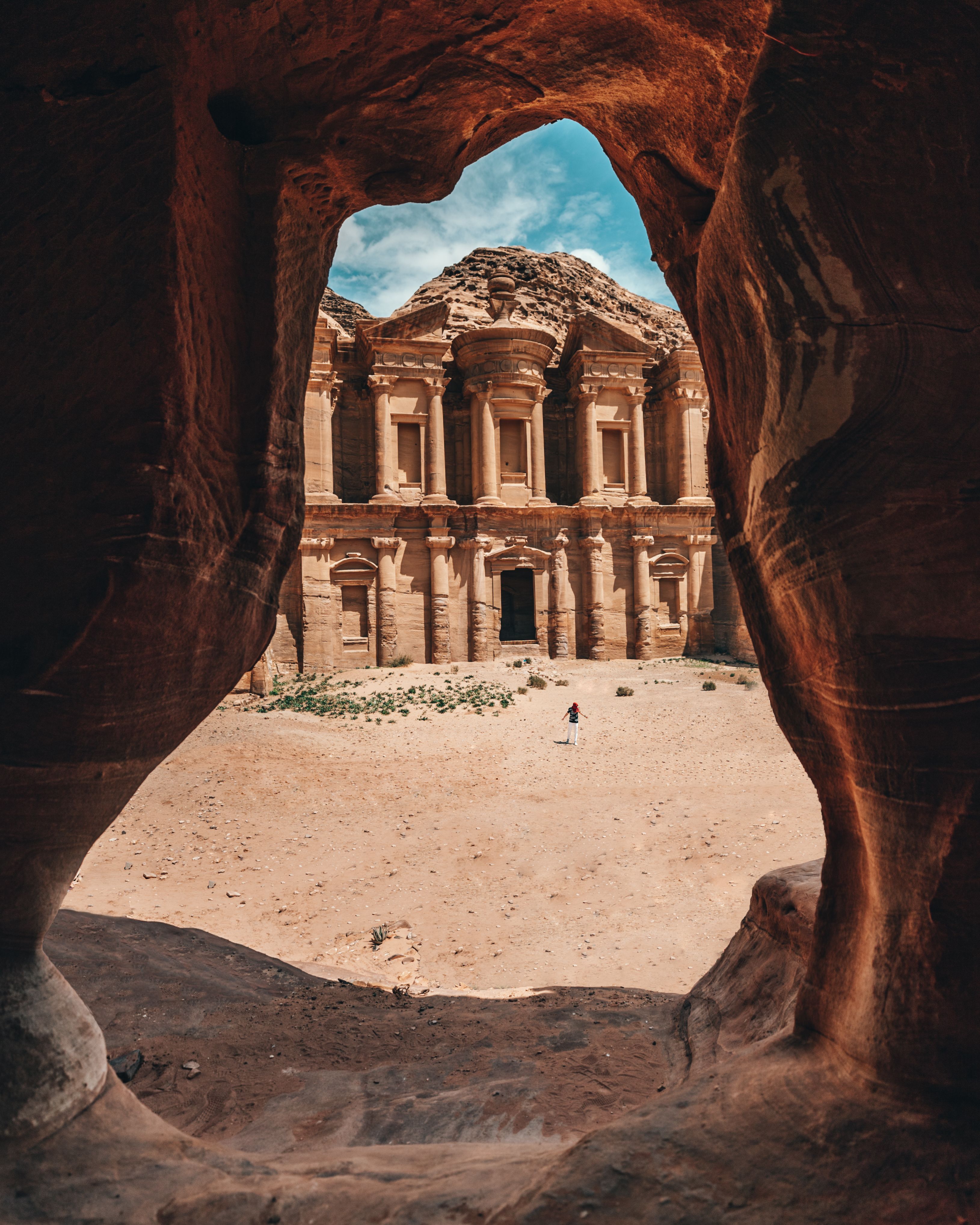
AlUla Saudi Arabia ancient city is one of the most extraordinary archaeological destinations on Earth — a vast oasis valley where Nabataean tombs, pre-Islamic rock art, and ancient trading routes converge in a landscape of dramatic rose-red sandstone. AlUla is Saudi Arabia’s greatest archaeological treasure, home to Hegra, the kingdom’s first UNESCO World Heritage Site. Yet until recently, almost no foreigners had seen it.
Where Is AlUla?
AlUla lies in the Medina Province of northwest Saudi Arabia, about 300 kilometres northeast of Medina and 1,100 kilometres north of Jeddah. The valley sits at an elevation of around 900 metres, surrounded by towering sandstone mountains sculpted by millions of years of wind and water erosion. This natural fortress drew human settlement from at least the second millennium BCE.
The region has been inhabited continuously for thousands of years. Dedanite and Lihyanite kingdoms flourished here before the Nabataeans arrived in the 4th century BCE. Furthermore, AlUla sits on the ancient Incense Route, the overland trade network that connected Arabia with the Mediterranean, Egypt, and India. Frankincense, myrrh, spices, and silk all passed through this valley.
Hegra: Saudi Arabia’s First UNESCO World Heritage Site
Hegra — known in antiquity as Mada’in Salih — is AlUla’s centrepiece. It was the Nabataean civilisation’s second city after Petra in modern Jordan. The Nabataeans carved more than 130 monumental rock-cut tombs directly into the sandstone outcrops between the 1st century BCE and 1st century CE. The scale and precision of these tombs remain breathtaking today.
The tombs at Hegra are larger than those at Petra. Many stand over 15 metres tall, with elaborately carved facades featuring Nabataean eagles, floral motifs, and inscriptions naming the tomb’s owner, their profession, and the penalties for misuse of the tomb. Consequently, they serve as both funerary monuments and historical documents, preserved for 2,000 years by the dry desert air.
Unlike Petra, which was developed for mass tourism over decades, Hegra is still being discovered. Archaeologists have excavated fewer than 10% of the site. Each season brings new finds — ancient wells, temples, market areas, and residential districts. According to Wikipedia’s entry on Hegra, the site covers approximately 52 square kilometres, with the major tomb groups clustered around isolated sandstone jebels rising from the valley floor.
Old Town Al-Ula: A Living Archaeological Layer
Beyond Hegra, Old Al-Ula town is a remarkably preserved medieval settlement that was inhabited until the 1980s. The old town sits at the base of a volcanic hill, its mud-brick buildings rising in terraced layers. At its peak, it housed around 800 homes, 400 shops, and a mosque that could accommodate the entire population.
Narrow covered alleyways wind between the buildings, creating a labyrinthine network of passages that protected residents from the brutal summer heat. The town’s fortifications, grain stores, and water management systems reflect centuries of adaptation to desert life. Today, restoration projects are conserving the old town while creating immersive cultural experiences for visitors.
AlUla Saudi Arabia Ancient City Landscapes: Elephant Rock and Beyond
The landscape around AlUla is as dramatic as its archaeology. Millions of years of geological erosion have sculpted the sandstone into extraordinary natural sculptures. The most famous is Elephant Rock — a 52-metre-high natural rock formation that bears a striking resemblance to a walking elephant, complete with a defined head and trunk.
The Sharaan Nature Reserve nearby covers 1,500 square kilometres of protected desert landscape. Arabian leopards, sand gazelles, and oryx live within its boundaries. The reserve is also home to extensive pre-Islamic rock art — petroglyphs carved by ancient peoples depicting camels, horses, hunting scenes, and geometric patterns. Some of these carvings are over 5,000 years old.
The Dadan area, near the modern town of AlUla, contains the remains of the ancient Dedanite and Lihyanite kingdoms — civilisations that preceded the Nabataeans and left their own remarkable rock-cut tombs and inscriptions. These Dadan tombs, carved into a sheer cliff face above the oasis palm gardens, offer a view across thousands of years of continuous human habitation in this remarkable valley.
Winter at Tantora: AlUla’s Cultural Festival
The Royal Commission for AlUla has developed an ambitious tourism programme centred on Winter at Tantora — an annual cultural festival running from October to March. During this period, international performers, artists, and orchestras stage events against the backdrop of the ancient tombs and canyon landscapes.
Concerts have been held at Maraya, an extraordinary structure clad entirely in mirrors that reflects the surrounding desert. At 9,740 square metres, Maraya holds the Guinness World Record for the world’s largest mirrored building. The contrast between this ultra-modern structure and the 2,000-year-old Nabataean tombs visible beyond it captures AlUla’s dual identity — ancient heritage and contemporary ambition.
How to Visit AlUla
AlUla has its own international airport, serviced by direct flights from Riyadh, Jeddah, Dubai, and several European cities. The best time to visit is October to March, when temperatures are pleasant (15–25°C). Summer heat exceeds 40°C and is best avoided.
- Hegra access: Visitors must book timed entry tickets in advance through the Experience AlUla app or website. Entry is by guided tour only — independent access is not permitted to protect the site.
- Elephant Rock: Free access at sunset, when the warm light transforms the rock into glowing amber. A café at the base serves refreshments.
- Old Town Al-Ula: Guided walking tours of the old town run daily and include access to the restored museum and viewpoints above the valley.
- Rock art: The Dadan and Jabal Ikmah sites require guided tours. Jabal Ikmah contains the largest concentration of ancient inscriptions in Saudi Arabia.
Frequently Asked Questions
Is AlUla open to tourists?
Yes. Saudi Arabia opened AlUla to international tourists in 2020. Visitors can apply for a tourist e-visa online. The site is actively developed for tourism under Vision 2030, with new hotels, transport links, and cultural experiences opening each season.
How does Hegra compare to Petra?
Hegra and Petra were built by the same Nabataean civilisation and share similar architectural styles. Hegra’s tombs are generally larger and better preserved. Petra has more developed infrastructure and receives many more visitors. Hegra offers a more exclusive, uncrowded experience at this stage of its development.
How many days do you need in AlUla?
Three to four days is the minimum to cover the main sites: Hegra, Old Town Al-Ula, Dadan, Elephant Rock, and Jabal Ikmah. A week allows for the Sharaan Nature Reserve, camel trekking, and deeper exploration of the canyon landscapes.
You Might Also Enjoy
- 7 Days in Saudi Arabia: AlUla, Riyadh and the Red Sea Itinerary
- Saudi Culture and Vision 2030: How the Kingdom Is Reinventing Itself
- Bedouin Culture: Arab Hospitality, Desert Life and Ancient Traditions
- Dead Sea Healing Traditions: The Ancient Wellness Secret of the Middle East
- Greek Philosophy and Ancient Athens: The Foundation of Western Thought