
Walk into almost any bar in Andalusia at 7pm and you will witness one of the world’s most civilised food rituals. Groups of people stand at zinc-topped counters, eating small dishes of food, drinking cold sherry or beer, talking loudly over each other, and moving between bars as naturally as if this were the most normal thing in the world — which, for them, it is. tapas culture is Spain’s greatest contribution to the world of food: not a specific dish, not a type of cuisine, but a way of eating — social, mobile, generous, and built on the belief that the best meals are those shared standing up with strangers.

What Is Tapas?
The word tapa means “lid” or “cover” in Spanish — and the etymology immediately suggests the origin story, though the true history is more complex. The most commonly told origin story involves Andalusian bar owners placing a small plate of food on top of a wine glass to keep out the flies — the food becoming an attraction in itself. Variations of this story involve King Alfonso X of Castile decreeing that taverns must serve food with alcohol to prevent drunkenness, or 19th-century Seville tavern keepers who discovered that placing a slice of ham or bread over a glass of sherry would attract and retain customers.
Whatever the precise origin — and culinary historians debate it vigorously — tapas as a cultural institution was firmly established in Andalusia by the 19th century and spread across Spain through the 20th. Today, tapas means different things in different regions: in the traditional Andalusian heartland of Seville, Granada, and Almería, many bars still give a free tapa with every drink ordered. In the rest of Spain, tapas are generally ordered and paid for. In the Basque Country, they have evolved into a distinct tradition — pintxos — that is arguably the most sophisticated bar food culture in the world.
The Art of Tapear: How the Spanish Eat Tapas
Tapear — the verb form of tapas — means to go from bar to bar eating tapas, and it is an art form with its own codes and pleasures. The practice typically begins at 7–8pm (Spain’s dinner hour is midnight by northern European standards; tapas begin where other cultures eat dinner), with groups of friends, colleagues, or families moving through two, three, or four bars in an evening. At each bar, one or two tapas are ordered — enough to taste, not enough to fill — before the group moves on.
The social structure of tapas is as important as the food itself. Unlike a restaurant dinner — where a group sits at a fixed table for the duration of the meal — tapas encourages movement, mixing, and the kind of casual social encounters that a seated meal inhibits. In Granada’s old tapas bars, strangers share standing space at the counter; in San Sebastián’s pintxos bars, the competition to try each bar’s specialty pintxo creates a festive atmosphere of gastronomic adventure. The meal is the journey, not the destination.
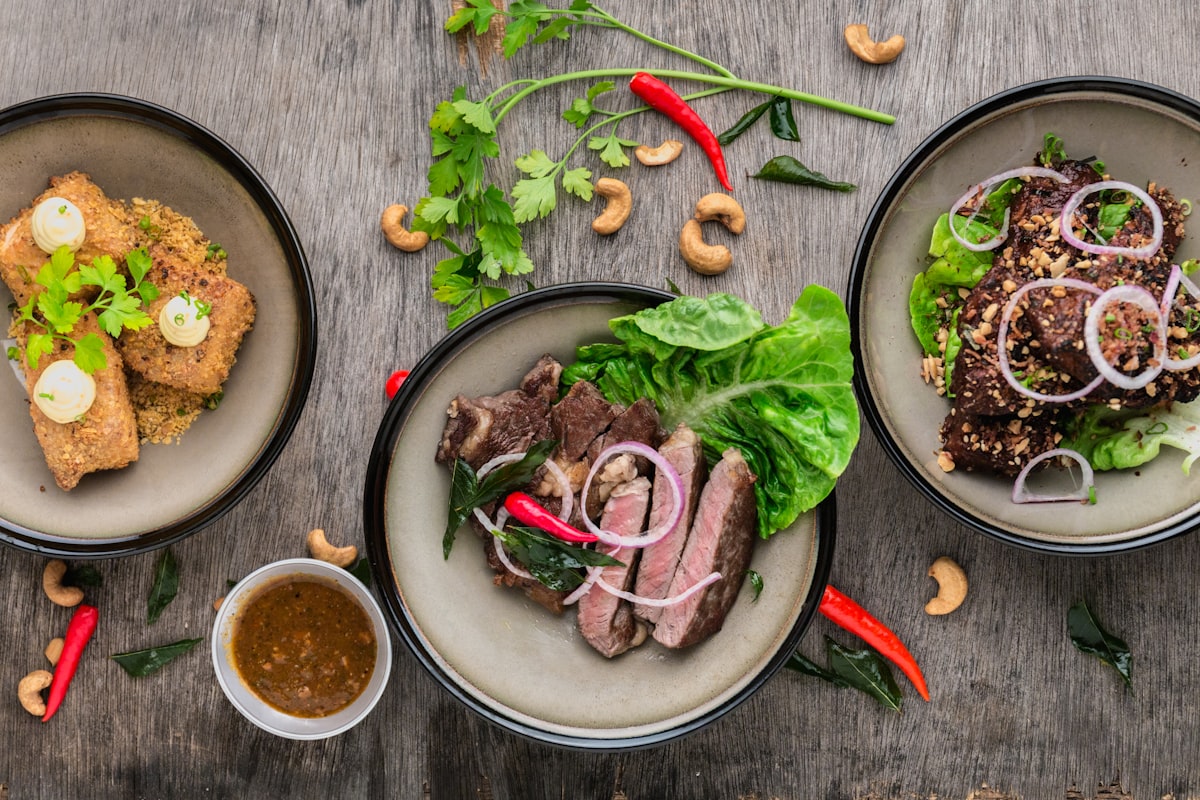
The Essential Tapas: A Spanish Food Education
The canon of classic Spanish tapas represents centuries of culinary tradition, regional specificity, and the application of simple techniques to exceptional ingredients:
- Jamón ibérico: The king of Spanish food — cured leg of black Iberian pig, acorn-fed (bellota) examples representing the pinnacle of European charcuterie. The best jamón ibérico de bellota is carved at the table from the leg and eaten immediately, its marbling melting at room temperature into something extraordinary.
- Gambas al ajillo: Prawns cooked in sizzling olive oil with garlic and chilli, served in the earthenware dish in which they were cooked — still bubbling at the table. One of Spanish cooking’s most perfect dishes: three ingredients, infinite pleasure.
- Patatas bravas: Fried potato chunks served with a spicy tomato sauce (or, in Catalan style, with aioli) — Spain’s answer to the French fry, but with more character. Every bar has its own version; the debate over whose is best is endless.
- Croquetas: Deep-fried béchamel croquettes with various fillings — jamón, bacalao (salt cod), mushroom, or chicken — at their best representing a perfect balance of crisp exterior and silky, intensely flavoured interior. Croquetas de jamón ibérico at a good Madrid bar are a benchmark of Spanish cooking.
- Pan con tomate: The Catalan contribution — toasted bread rubbed with ripe tomato and drizzled with olive oil. Its simplicity is deceptive: made with bad tomatoes or mediocre olive oil it is merely bread; made with ripe summer tomatoes and Arbequina EVOO it is transcendent.
- Pulpo a la gallega: Galician-style octopus — boiled, sliced, dressed with smoked paprika, olive oil, and coarse salt on a wooden board. The Spanish northwest’s greatest gift to the tapa lexicon.
- Tortilla española: The Spanish omelette — thick, potato-filled, served at room temperature in a wedge. The debate between “runny centre” (jugosa) and “fully set” has divided Spanish society more reliably than politics for generations.
Regional Variations: Tapas Is Not a Monolith
One of tapas culture’s most fascinating aspects is its regional diversity. What “tapas” means varies dramatically across Spain’s 17 autonomous communities:
- Andalusia: The traditional heartland — free tapas with drinks in Seville, Granada (where the tapas are notably more elaborate than elsewhere and still completely free), Almería, and Jerez. The culture here is most generous and most deeply embedded in daily social life.
- Basque Country (pintxos): The most sophisticated regional variation. Pintxos are typically served on slices of bread, anchored with a toothpick (the name derives from the verb pinchar, “to spike”). San Sebastián’s pintxos bars — particularly in the old town — represent perhaps the world’s highest concentration of culinary excellence per square metre. The annual Semana Grande pintxos competition produces extraordinary innovations.
- Catalonia (montaditos): Small servings on bread — the Catalan variation tends toward more Mediterranean ingredients and the influence of France and Italy is detectable.
- Madrid: The capital has absorbed all regional traditions while developing its own — the Mercado de San Miguel (a covered market of food stalls) and the bars of La Latina and Lavapiés represent Madrid’s version of the tapas scene.
- Galicia (raciones): The northwest tends toward larger servings (raciones) rather than small tapas — the region’s culinary culture is defined by its seafood, particularly octopus, clams, mussels, and barnacles.
The Sherry Question: What to Drink With Tapas
In Andalusia — tapas’ homeland — the natural drink is sherry (jerez): the fortified wine produced in and around the town of Jerez de la Frontera from Palomino grapes, aged in the solera system and ranging from bone-dry manzanilla and fino through increasingly rich amontillado, oloroso, and palo cortado to the lusciously sweet Pedro Ximénez. Sherry’s natural acidity, its saline notes (from the marine influence on the coastal vineyards), and its extraordinary range make it one of the world’s most food-friendly wines — and its specific pairing with Andalusian tapas is one of the great gastronomic marriages in European culture. A glass of chilled fino with jamón ibérico, eaten at a marble counter in Seville at 8pm, is an experience that rewards travel from any distance.
In the Basque Country, the local drink is txakoli — a lightly sparkling, very dry white wine with high acidity that cuts through the richness of pintxos perfectly. In Catalonia, local cava (sparkling wine made by the traditional method) serves the same function. In Madrid, beer (cerveza) in small glasses (cañas) is the most common accompaniment.
Tapas and Spanish Social Culture
tapas culture is inseparable from Spanish social life in a way that has no real parallel in Northern European or American food culture. The Spanish tapa is not a snack or a starter — it is an occasion, a reason to gather, a social lubricant of extraordinary efficiency. Deals are done over tapas, relationships are built over tapas, arguments are resolved (or begun) over tapas. The bar — the specific bar where everyone knows the name of the barman, where the jamón is carved to order, where the same group has been drinking on Thursday evenings for 20 years — is as much a social institution as the church or the town hall.
This social function explains why Spain’s tapas culture has been so resistant to the homogenising forces of global restaurant culture. International fast food chains exist in Spain, of course — but they have never displaced the tapas bar in the way that convenience food has displaced home cooking in the UK or US. The Spanish relationship with food is too social, too embedded in daily ritual, and too pleasurable to surrender to efficiency.
Tapas Goes Global: Adaptation Without Dilution
Tapas-style small plate restaurants have proliferated worldwide over the past two decades — in London, New York, Sydney, and Tokyo, “small plates” menus draw on the tapas concept while adapting it to local ingredients and palates. This global spread has produced some excellent food, but it has also created a diluted version of tapas that misses the essential social dimension. The best tapas are not experienced at a restaurant table with a menu — they are experienced standing at a bar, ordering one thing at a time, responding to what the day’s catch has produced, in conversation with the person behind the counter who has been doing this for 30 years. That experience, more than any specific dish, is what tapas culture actually is.
Frequently Asked Questions
What is the difference between tapas and pintxos?
tapas is the general Spanish term for small food portions served in bars. Pintxos (also spelled pinchos) is the Basque Country’s specific variation — typically small bites served on bread, anchored with a toothpick, displayed on bar counters for customers to select. Pintxos tend to be more elaborate, more artistically composed, and more frequently updated than traditional tapas. The Basque pintxos culture is widely considered the most sophisticated bar food tradition in the world.
In which Spanish cities do bars still give free tapas?
Free tapas with every drink remain standard in Granada (where they are particularly generous and elaborate), Almería, Jaén, and parts of Seville and Cádiz. In most of the rest of Spain — Madrid, Barcelona, the Basque Country, Valencia — tapas are ordered and paid for separately. The free tapa tradition is essentially Andalusian, and Granada is its most impressive surviving expression.
tapas culture teaches us that the best food is always food that brings people together. Explore more food cultures from around the world on CulturalDiaries.
2 responses to “Tapas Culture in Spain: More Than Just Small Plates”
[…] week-long Fiestas de los Gigantes y Cabezudos, which includes music, parades, fireworks, and paella competitions. Staying for the full week provides a more rounded cultural […]
[…] Tapas Culture in Spain […]