
Of all the foods humans have invented, none is more universal, more ancient, more culturally revealing, or more emotionally loaded than bread. From the ancient Egyptian sourdough loaves found preserved in tombs, to the griddle flatbreads of nomadic peoples who could carry their grain and their cooking stone across any landscape, to the yeasted masterpieces of French boulangeries and the teff-based injera of Ethiopian tables, bread culture expresses something fundamental about every civilisation that has created it: its agricultural base, its religious life, its social structure, and its relationship with the act of feeding community. “Breaking bread” is the oldest metaphor for human fellowship — because for most of human history, bread was the meal, and sharing it was the most basic social act.
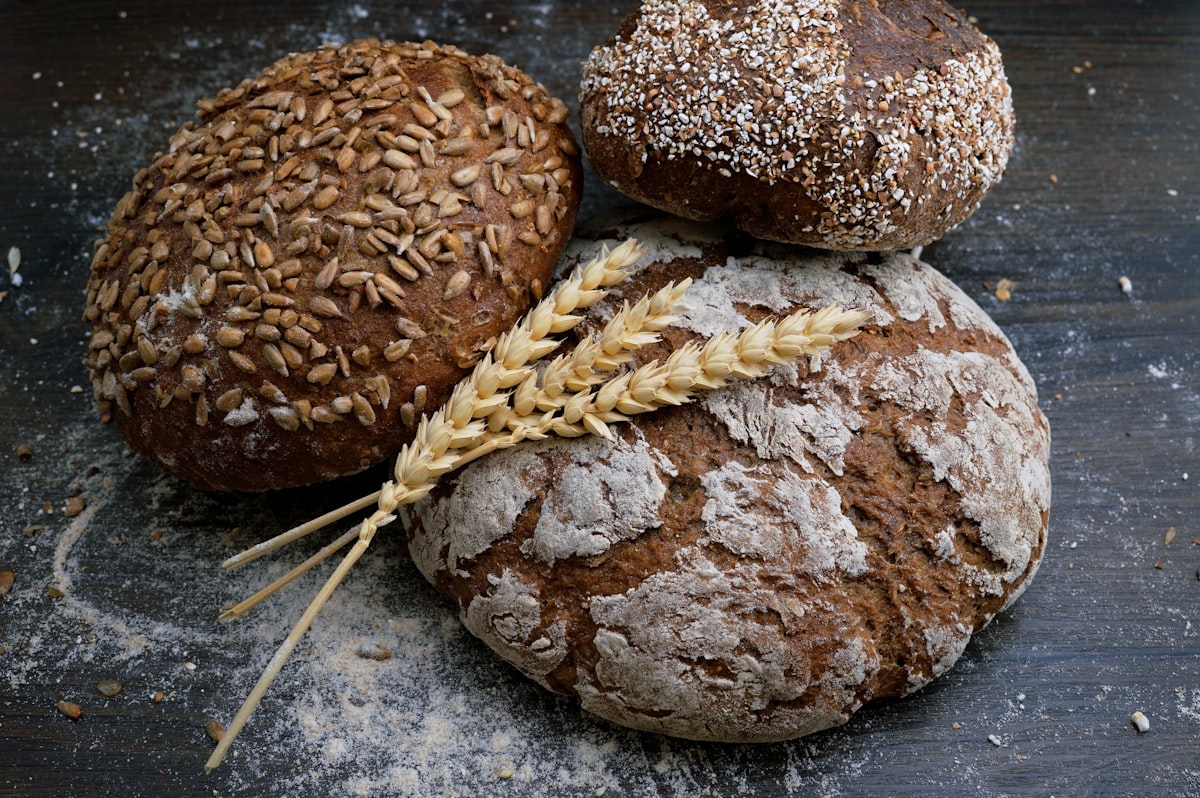
The Origins: Accident, Agriculture, and Fermentation
bread is almost certainly one of humanity’s oldest accidental discoveries. Archaeological evidence suggests that humans were making flour from wild grain seeds — grinding them between stones and mixing with water — at least 32,000 years ago, before the Neolithic agricultural revolution. The first flatbreads may have been accidental: grain paste placed too close to a fire, or grain scattered on hot stones while cooking something else. The discovery that fermentation — the activity of wild yeasts on a flour-water mixture left standing — produced a lighter, more digestible, more flavourful product than unleavened flatbread was a technological revolution as significant as the invention of the wheel.
Ancient Egypt is often credited with the first true leavened bread — archaeological evidence from the First Dynasty (approximately 3100 BCE) confirms that Egyptians were making yeast-risen bread, and the numerous loaves found preserved in tombs show a sophisticated baking culture. Egyptian workers building the pyramids at Giza were paid partly in bread — rations of bread and beer were the primary caloric sustenance of the ancient world’s most ambitious construction project. The bread culture of ancient Egypt was so developed that they had at least 30 distinct bread varieties, some reserved for temple offerings and some for ordinary consumption.
Bread and Religion: The Sacred Loaf
Bread’s centrality to religion across cultures reflects its status as the most essential food — the thing without which life cannot continue:
- Christianity: Bread is the body of Christ in the Eucharist — the central sacrament of Christianity in which, depending on theological tradition, ordinary bread is either transformed into or merely represents Christ’s body. The Last Supper’s breaking of bread has made this gesture central to Christian culture for 2,000 years. The Lord’s Prayer’s “Give us this day our daily bread” encodes the absolute centrality of bread to survival in the ancient world.
- Judaism: Challah — the braided ceremonial bread — is central to Shabbat and holiday observance. The Passover prohibition on leavened bread (chametz) — replaced by matzah (unleavened flatbread) for eight days — commemorates the Israelites’ hasty exodus from Egypt without time to let their bread rise. Bread is blessed (motzi) before every traditional Jewish meal.
- Islam: Bread (particularly khubz, the round flatbread) is so sacred in Islamic culture that it must not be thrown away or stepped upon — dropped bread is picked up, kissed, and placed at a height rather than discarded. Ramadan iftar (breaking of the fast) always includes bread as the fundamental food.
- Ancient Rome: The state provision of free bread (later combined with circuses — “panem et circenses”) to Rome’s urban poor was a fundamental political instrument. The Pontifex Maximus — Rome’s chief priest — was etymologically “the great bridge builder” but practically associated with oversight of the sacred grain stores. Roman military campaigns were organised around the capacity to secure grain supplies.

The World’s Great Bread Cultures
- France — The Baguette: The French baguette is UNESCO-inscribed as an Intangible Cultural Heritage — not because the bread itself is extraordinary (it is excellent but not uniquely so) but because the cultural practices surrounding it are. The legal definition of a baguette de tradition (flour, water, salt, yeast — no additives, no preservatives), the daily trip to the boulangerie, the specific etiquette of carrying the baguette home and tearing it at the table — all constitute a cultural system as complex as any other. France has approximately one boulangerie for every 4,000 inhabitants, and the boulangerie’s social function as a daily neighbourhood gathering point is legally protected.
- Ethiopia — Injera: The sourdough flatbread of Ethiopia and Eritrea — made from teff grain, fermented for three days, cooked on a large clay griddle — serves simultaneously as plate, utensil, and primary food source. Read our complete injera guide.
- Georgia — Shoti and Khachapuri: Georgian shoti (a canoe-shaped sourdough baked in a cone-shaped clay oven called a tone) and khachapuri (cheese-filled bread) are the foundations of a bread culture that food writers consistently describe as extraordinary. Georgian bread culture is inseparable from the country’s wine culture and hospitality tradition (supra).
- Middle East — Flatbreads: The vast family of Middle Eastern flatbreads — pita, lavash, sangak, barbari, markook — reflects the region’s diversity of grain types, oven technologies, and cultural traditions. Lavash (Armenia’s paper-thin baked flatbread) is UNESCO-inscribed; sangak (the Iranian griddle bread baked on a bed of pebbles, producing a characteristic dimpled surface) is among the world’s most distinctive breads.
- India — Roti and Naan: Indian bread culture encompasses hundreds of distinct bread types across regions — the paper-thin papad of southern India, the layered paratha of the north, the tandoor-baked naan of Punjabi restaurants worldwide, the puri (deep-fried flatbread that puffs spectacularly) of festive cooking, and the simple roti (unleavened wheat flatbread) that is the daily bread of hundreds of millions of Indians. Each expresses its regional grain, its cooking technology, and its social context.
- Scandinavia — Rye: The dark, dense, long-lasting rye breads of Scandinavia — Swedish knäckebröd (crispbread), Danish rugbrød (sourdough rye), Norwegian lefse — reflect both the agricultural reality of northern grain cultivation (rye thrives where wheat cannot) and the cultural emphasis on practicality, longevity, and unfussy sustenance.
Frequently Asked Questions
When was leavened bread first made?
Evidence of leavened flatbread has been found at Shubayqa in Jordan, dating to approximately 14,400 years ago — predating the agricultural revolution. Egyptian evidence of fully leavened, risen bread dates to approximately 3100 BCE. The specific moment of discovery is impossible to pinpoint, as fermentation is a natural process that ancient bakers likely discovered accidentally and then learned to control deliberately.
The culture of bread proves that the most basic human needs generate the most extraordinary cultural complexity. Explore more food cultures from around the world on CulturalDiaries.