

10 Days in Turkey: Istanbul, Cappadocia & the Turkish Coast
Istanbul · Cappadocia · Pamukkale · Ephesus · Bodrum
Turkey is where East definitively meets West — a country that spans two continents, carries the legacy of four great empires (Hittite, Roman, Byzantine, Ottoman), and produces food, architecture, and culture that reflect all of these in extraordinary depth. This 10-day itinerary moves from Istanbul’s 2,000-year history through the volcanic lunar landscape of Cappadocia to the Aegean coast.
Quick Reference
| Best Time | April–May or September–October (mild weather, fewer crowds than summer) |
| Daily Budget | USD 60–120/day (Turkey is excellent value since 2022 currency decline) |
| Currency | Turkish Lira (TRY). USD and EUR widely accepted at tourist sites. |
| Visa | US: e-Visa required ($50, apply online). UK: e-Visa. AU/CA: e-Visa. |
| Internal Transport | Domestic flights cheapest option (Pegasus, Turkish Airlines). Overnight buses good value. |
| Key Food | Breakfast is the most important meal — Turkish breakfast (kahvalti) is extraordinary |
Day-by-Day Itinerary
Days 1–3 — Istanbul: See the Previous Entry
See our Istanbul Cultural Guide
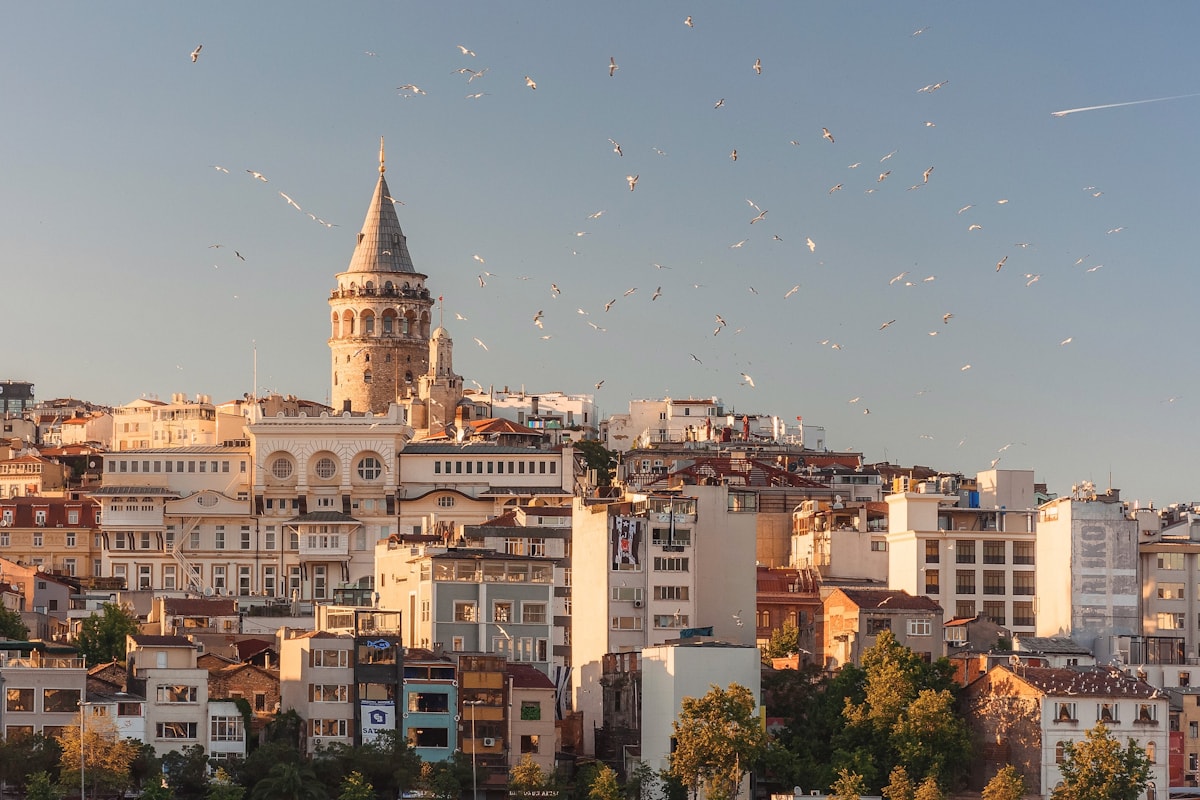
Days 1–3 in Istanbul cover Hagia Sophia, Blue Mosque, Topkapi Palace, Grand Bazaar, Basilica Cistern, Galata Tower, and the Bosphorus. See our full Istanbul Cultural Guide for comprehensive details. Also essential: a Bosphorus ferry crossing (€2 regular commuter ferry from Eminönü — the world’s best-value sightseeing cruise) and breakfast at a Karaköy balcony café watching the ships.
Days 4–6 — Cappadocia: The Lunar Landscape
Fairy Chimneys and Cave Hotels
Cappadocia’s extraordinary landscape was created by volcanic eruptions 9–3 million years ago — thick layers of tuff (soft volcanic rock) were sculpted by erosion into the ‘fairy chimney’ formations, some of which were hollowed into dwellings as early as the Hittite period (1600 BC). The Göreme valley contains 11 rock-cut Byzantine churches with intact 10th–11th century frescoes. Stay in a cave hotel in Göreme or Üçhisar — genuinely the finest accommodation experience in Turkey.
Hot Air Balloon at Dawn
The Cappadocia hot air balloon experience (€150–€200, ~1 hour) is among the most spectacular on Earth — drifting over the fairy chimney formations at sunrise, above valleys of rock pillars, cave churches, and pigeon houses carved into cliff faces. Up to 150 balloons launch simultaneously; the spectacle from the ground is almost as impressive as from above. Book well in advance.
Underground Cities
Derinkuyu and Kaymakli are underground cities carved 8 storeys deep into the tuff — large enough to house 20,000 people with their livestock, food stores, and wineries. Built during periods of persecution (Byzantine Christians hiding from Arab raids; early Christians from Roman persecution), they are some of the most extraordinary archaeological sites in Turkey.
The valleys are best explored on horseback or by e-bike — the Love Valley, Rose Valley, and Pigeon Valley trails are all navigable in a day.
Pro Tip
Days 7–8 — Pamukkale and Ephesus
Pamukkale — Cotton Castle
Pamukkale (Cotton Castle) is a natural phenomenon — calcium-rich thermal springs have deposited brilliant white travertine terraces on a hillside over thousands of years, creating frozen white waterfalls with warm turquoise mineral pools. You can walk barefoot across the terraces and bathe in the pools. Above: Hierapolis, a complete Roman spa city from the 2nd century AD.
Ephesus — The Best-Preserved Roman City
Ephesus was once the second-largest city in the Roman Empire (250,000 people) and the site of the Temple of Artemis — one of the Seven Wonders of the Ancient World. The ruins include the Library of Celsus (its façade essentially complete), a 25,000-seat theatre, marble-paved streets, and the Terrace Houses — private Roman residences with original mosaics and frescoes still in situ. One of the world’s finest archaeological sites.
Days 9–10 — Bodrum and the Aegean Coast
Bodrum Castle and the Mausoleum
Bodrum was ancient Halicarnassus — birthplace of Herodotus (the ‘Father of History’) and site of the Mausoleum of Halicarnassus, one of the Seven Wonders of the Ancient World (now largely destroyed). Bodrum Castle (1402–1522, Knights Hospitaller) houses the Museum of Underwater Archaeology — the finest collection of Bronze Age shipwreck artefacts in the world, including the oldest known shipwreck (Uluburun, 1300 BC).
Turkish Breakfast and Final Aegean Day
The Turkish breakfast (kahvalti) deserves its own itinerary. A full spread includes: white cheese, tulum cheese, olives, honey, clotted cream, tomatoes, cucumbers, eggs (menemen — scrambled eggs with tomatoes and peppers, or fried), pastırma, sucuk (spiced sausage), fresh bread, and tea in tulip glasses. Minimum 15 items. Eaten slowly for 90 minutes. The finest breakfast tradition in the world.

Cultural Etiquette & Tips
- Mosques: Remove shoes at entrance. Women must cover head, shoulders and knees. Visit outside prayer times (5 times daily). Be quiet and respectful.
- Haggling: Expected at the Grand Bazaar and Spice Market. Not at restaurants, regular shops, or for services. Open with a counteroffer of 40–50% of asking price.
- Tea culture: Chai (black tea in tulip glasses) will be offered constantly — at shops, during negotiations, after meals. Accepting is good manners. Refusing is mildly rude.
- Raki: Turkey’s national spirit — anise-flavoured, turns milky white with water. Drunk slowly with meze during long dinners. The correct pace of consumption is the key to enjoying it.
- Photography: Always ask before photographing people. Military installations, some government buildings, and some archaeological sites restrict photography — obey the signs.
Frequently Asked Questions
Do I need a visa for Turkey?
Most Western nationalities require an e-Visa (~$50–75 USD, depending on nationality) applied for online before arrival at evisa.gov.tr. Processing is immediate; print or save to your phone. Some nationalities are visa-free. Check current requirements — they change regularly.
Is Turkey safe to visit?
Turkey is generally safe for tourists in the main tourist areas. The western coast, Istanbul, Cappadocia, and Ankara are safe. Exercise caution near the Syrian and Iraqi borders. Standard urban precautions apply in Istanbul — pickpocketing in the Grand Bazaar and Sultanahmet is the main risk.
What is the best season for Cappadocia balloons?
Year-round, but April–October has the most reliable flying conditions. Balloons are cancelled if wind exceeds 35km/h — in winter this happens frequently. Summer (July–August) has the most reliable conditions but also the most tourists. Spring and autumn are the sweet spot.
More Travel Itineraries
Explore more cultural travel itineraries on CulturalDiaries.com — day-by-day guides to the world’s most extraordinary destinations.
5 responses to “10 Days in Turkey: Istanbul, Cappadocia & the Turkish Coast”
[…] rose and fell. The central arteries crossed Central Asia through modern Uzbekistan, Iran, and Turkey; the maritime routes connected India, Arabia, and East Africa. It operated continuously from […]
[…] is widely considered to be mole — a complex sauce of chillies, chocolate, and spices served over turkey or chicken. The USA doesn’t have an official national dish, but hamburgers, hot dogs, and […]
[…] Afghanistan, Azerbaijan, Kazakhstan, Kyrgyzstan, Tajikistan, Turkmenistan, Uzbekistan, Iraq, Syria, Turkey, Georgia, Albania, and India (among the Parsi community). It was inscribed on UNESCO’s […]
[…] only mosque in Turkey with six minarets — a controversial decision when built (six minarets was the number at the […]
[…] (Spain); the Imam Mosque and Ali Qapu Palace, Isfahan (Iran); the Süleymaniye Mosque, Istanbul (Turkey); the Al-Attarine Madrasa, Fez (Morocco); and the Topkapi Palace, Istanbul (Turkey). For Islamic […]