

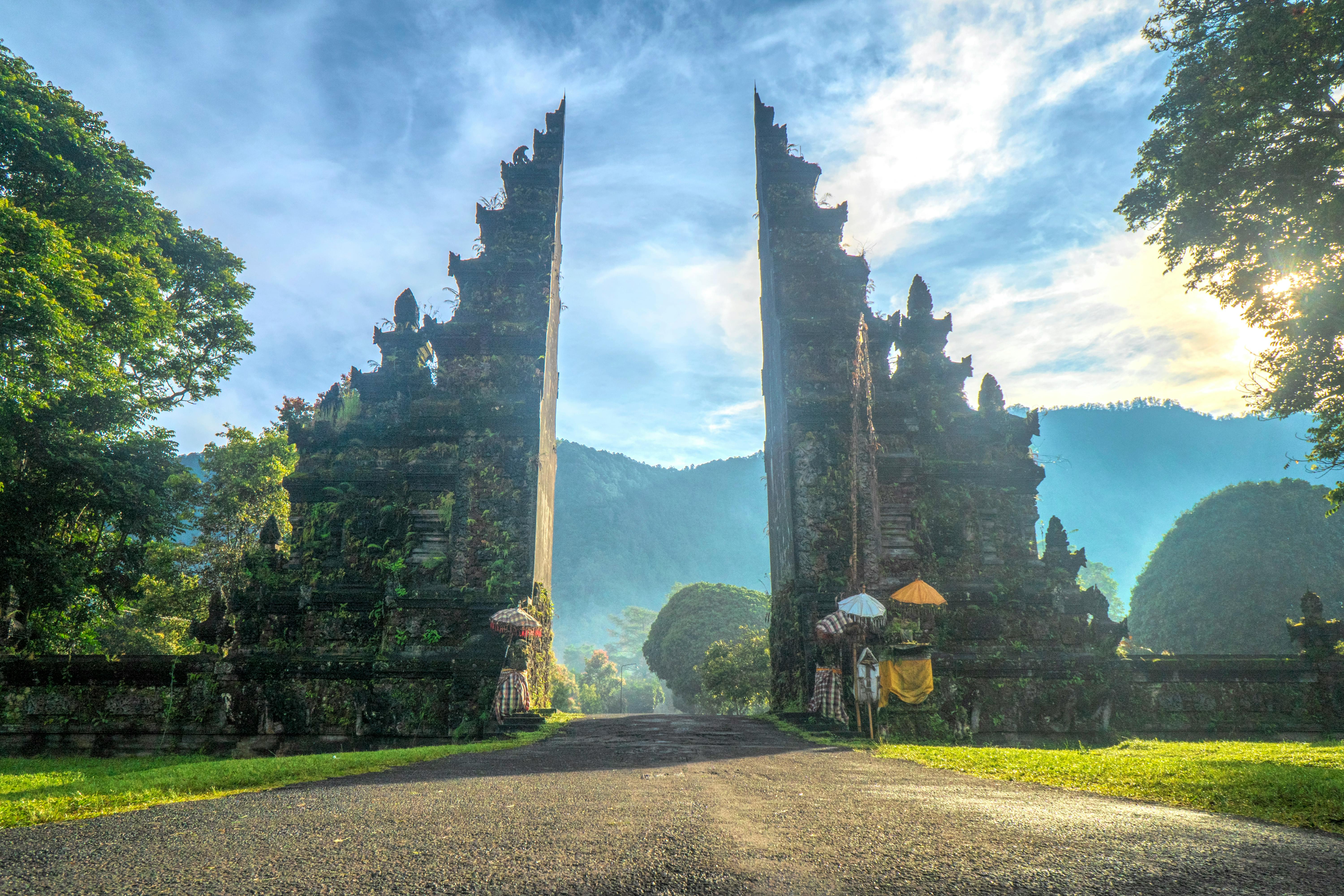
7 Days in Bali: Temples, Rice Terraces, and Sacred Beaches
A Bali itinerary of 7 days takes you through one of the world’s most spiritually charged islands — a place where Balinese Hindu ceremonies happen daily on every street corner, where rice terraces stepped into volcanic hillsides have fed communities for a thousand years, and where the Indian Ocean crashes against black sand beaches and limestone sea cliffs with a force that feels genuinely elemental. Bali is the most visited island in Southeast Asia and, for good reason: it offers beauty, culture, spirituality, food, and natural drama in a density that few destinations anywhere can match. Seven days, planned carefully, will leave you understanding why people return here year after year.
Bali is a Hindu island in the world’s largest Muslim-majority nation — a cultural anomaly that survived the Islamisation of Java and the rest of Indonesia in the 15th–16th centuries by geographic isolation and fierce spiritual coherence. The Balinese Hindu culture you witness today — the daily offerings (canang sari), the temple festivals, the shadow puppet theatre, the cremation ceremonies — is a living tradition, not a performance for tourists. Approach it with genuine respect and it will reveal itself in ways most visitors never reach.
Bali Itinerary: Quick Reference
| Best time to visit | April–October (dry season); avoid November–March (heavy rain, flooding) |
| Currency | Indonesian Rupiah (IDR); $1 ≈ IDR 15,800 |
| Language | Balinese and Indonesian; English widely spoken in tourist areas |
| Visa | Visa on arrival for most nationalities ($35, valid 30 days, extendable) |
| Getting around | Hire a private driver ($35–50/day) or scooter ($5–8/day); Grab app for taxis |
| Budget (per day) | Budget: $25–40 | Mid-range: $60–120 | Luxury: $200+ |
| Temple dress | Sarong and sash required at all temples — usually provided or rented at entrance |
Day 1–3: Ubud — Cultural Heart of Bali
Day 1 — Arrive and Orient: Ubud sits in Bali’s spiritual and artistic centre — a town of galleries, craft workshops, rice field walks, and temples set in a green valley 45 minutes north of the airport. Check into a rice-field-view villa (Ubud has the finest accommodation value in Bali) and spend the afternoon at the Sacred Monkey Forest Sanctuary — a protected forest of 700 long-tailed macaques and three ancient Hindu temples, where the monkeys have learned to steal sunglasses with impressive precision. Evening: the Kecak fire dance at Pura Dalem Ubud temple — a hypnotic performance of 50+ men creating rhythmic vocal percussion while enacting episodes from the Hindu Ramayana, performed at dusk with fire torch effects.
Day 2 — Temples and Terraces: The Tegallalang Rice Terraces — the most photographed rice terraces in Bali, their cascading green steps following the contours of a river valley — are best visited at 7:00–8:00 AM before tour groups arrive and the Instagram crowds appear. The irrigation system used here — subak — is a 1,000-year-old cooperative water management tradition designated by UNESCO as World Heritage. In the afternoon, Pura Tirta Empul — the sacred spring temple where Balinese Hindus perform ritual purification bathing in holy spring water — is one of Bali’s most spiritually authentic experiences. Visitors may participate (with appropriate dress and behaviour) in the purification ritual.
Day 3 — Art and Healing: Ubud is Bali’s art capital — the Neka Art Museum and ARMA Museum contain the finest collections of Balinese painting, tracing its evolution from classical court art through the influence of Western artists (Walter Spies, Rudolf Bonnet) who settled here in the 1930s. A traditional Balinese massage at one of Ubud’s skilled spas (Taksu, Karsa, Fivelements) is genuinely therapeutic — Balinese massage uses a combination of acupressure, firm stretching, and aromatherapy that has evolved over centuries. Evening: cooking class at a local family compound, learning to make nasi goreng, sate lilit, and jamu herbal tonic.
Day 4: Mount Batur Sunrise Hike
Wake at 2:00 AM for the 45-minute drive to Mount Batur (1,717m) — Bali’s most active volcano and the site of the island’s most rewarding physical challenge. The 2-hour hike to the crater rim in darkness, guided by torchlight, arrives at the summit just before sunrise. The view — from the crater edge over Lake Batur in the caldera below, with Bali’s mountains and the coast visible in every direction — is extraordinary. Guides cook eggs in volcanic steam for breakfast at the summit. The descent takes 1.5 hours. Return to Ubud or continue south to Seminyak/Canggu.
Day 5–6: Seminyak, Canggu, and the South
Day 5 — Beach Culture: Seminyak Beach offers Bali’s finest sunset-watching from beach clubs (Ku De Ta, Potato Head, La Plancha) where cocktails arrive as the sky turns orange behind the Indian Ocean horizon. The area between Seminyak and Canggu has become Bali’s digital nomad hub — lined with coffee shops, yoga studios, and surf schools. Echo Beach in Canggu has consistent left-hand surf breaks and good-value surf lessons for beginners.
Day 6 — Uluwatu Peninsula: The Uluwatu Temple (Pura Luhur Uluwatu) clings to a 70-metre sea cliff at Bali’s southern tip — one of Bali’s six key temples and one of its most dramatic locations. The cliff-face temple complex overlooks the Indian Ocean breaking against limestone formations below. The Kecak dance at Uluwatu (6:00 PM daily) is the most atmospheric performance in Bali — 100 men in the clifftop amphitheatre with the ocean sunset as backdrop. Nearby, the Uluwatu surf breaks (Padang Padang, Uluwatu itself) are among the finest in Southeast Asia — world-class reef breaks that produce long, hollow left-handers.
Day 7: East Bali — Water Palaces and Black Sand
Drive east to Tirta Gangga — a royal water palace built in 1946 with multi-tiered fountains, stone statues, and koi-filled pools set against the green slopes of Mount Agung (Bali’s sacred volcano and highest peak at 3,031m). Continue to Amed — a series of fishing villages on Bali’s northeast coast where the beach is black volcanic sand, the water is crystal clear, and the Japanese WWII shipwrecks offer some of the finest shore diving in Indonesia. This quieter eastern Bali feels like a different island from the busy south — a final day of genuine peace before departure.
Cultural Etiquette in Bali
- Dress respectfully at temples: Sarong and sash are mandatory — usually available to rent or borrow at entrances. Cover shoulders and knees.
- Don’t step on offerings: The canang sari — small palm-leaf baskets of flowers, incense, and food placed on the ground as daily offerings — are sacred. Step around them carefully.
- Never touch someone’s head: The head is spiritually the highest part of the body. Never pat a child (or adult) on the head.
- Point with your thumb, not index finger: Pointing with the index finger is considered rude. Use your thumb or gesture with the whole hand.
- Women during menstruation: Balinese Hindu tradition holds that menstruating women should not enter temples. Signs at temple entrances typically note this.
- Bargain at markets, not shops: Ubud Art Market and street vendors expect negotiation. Fixed-price restaurants and established shops do not.
Frequently Asked Questions
Is Bali safe for solo female travellers?
Bali is one of Southeast Asia’s safest destinations for solo women. The Balinese are genuinely hospitable, tourist infrastructure is excellent, and the culture is respectful. Normal precautions apply — don’t leave drinks unattended, use reputable transport apps, and be cautious in very quiet areas at night. Ubud in particular has a strong solo female traveller community.
Should I rent a scooter in Bali?
Only if you are an experienced rider. Bali’s roads — particularly in Seminyak, Kuta, and Canggu — are chaotic, poorly maintained in places, and involve significant motorbike traffic. Many tourists are injured in scooter accidents annually. A private driver ($35–50/day for a full day including the driver’s time and fuel) is genuinely the safer and more relaxing option for most visitors.