
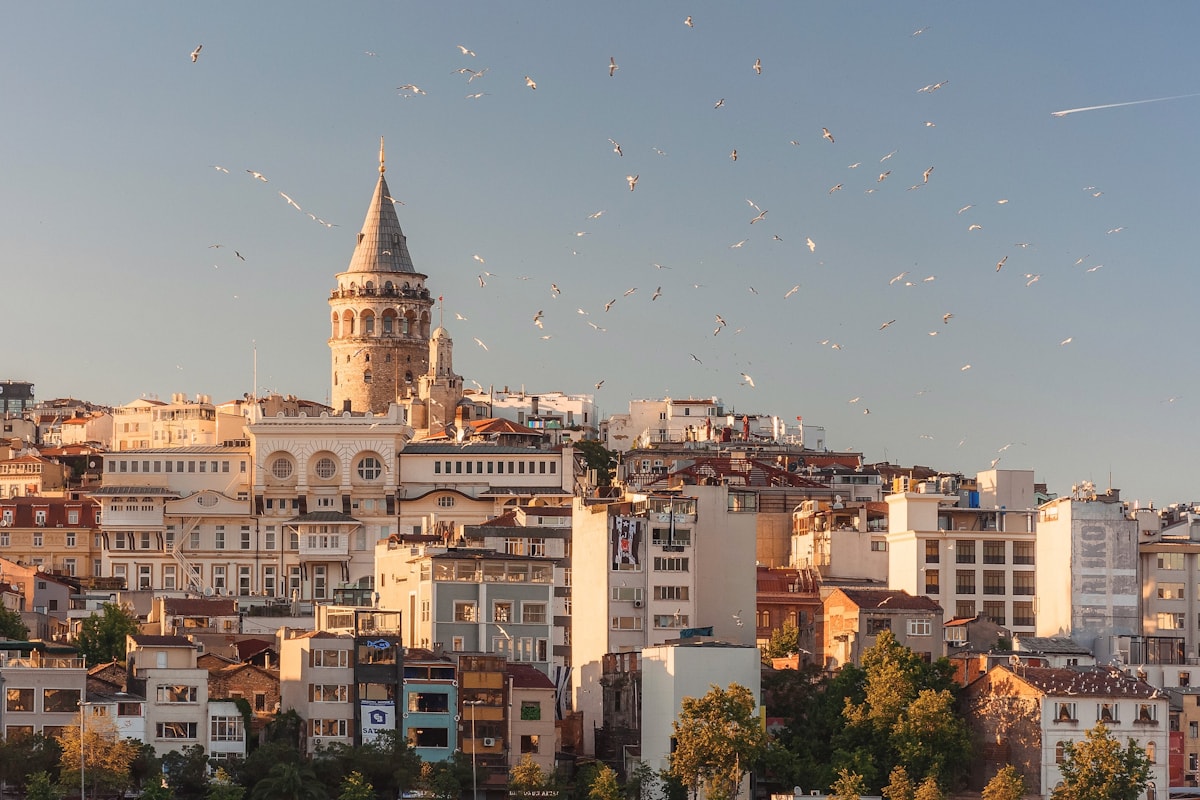
Istanbul is the only city in the world that sits on two continents — one foot in Europe, one in Asia, straddling the Bosphorus Strait. It has been the capital of three of history’s greatest empires: Roman, Byzantine, and Ottoman. Understanding Istanbul means understanding 2,000 years of civilisational collision, and there is no city on Earth that does that more visibly, more beautifully, or more deliciously.
Three Empires, One City
Constantinople was founded by Emperor Constantine I in 330 AD as the new capital of the Roman Empire — positioned at the crossroads of Europe and Asia, controlling the only sea route between the Black Sea and Mediterranean. It became the capital of the Byzantine (Eastern Roman) Empire for 1,123 years. In 1453, Sultan Mehmed II conquered the city, renamed it Constantinople (Istanbul is a corruption of the Greek ‘eis tin polin’ — ‘to the city’), and made it the capital of the Ottoman Empire for 469 more years.
What This History Means for Visitors
Istanbul’s historic peninsula contains Byzantine mosaics inside Ottoman mosques, Roman columns holding up Ottoman cisterns, and Topkapi Palace containing Byzantine relics alongside Ottoman treasures. Every layer of the city is visible if you know what to look for.
Essential Cultural Sites
These are the sites that define Istanbul’s civilisational depth:
Hagia Sophia
Built by Emperor Justinian in 537 AD as a Christian cathedral — the largest building in the world for nearly 1,000 years. Converted to a mosque in 1453 when the Ottomans added four minarets. Converted to a museum in 1934 by Atatürk. Reconverted to a mosque in 2020. Inside: 6th century Byzantine gold mosaics exist alongside Islamic calligraphy — the most visually complex building in the world.
Blue Mosque (Sultan Ahmed Mosque)
Built 1609–1616 with six minarets (so controversial that the architect was reportedly sent to Mecca to add a seventh minaret to the Grand Mosque to restore the Blue Mosque’s status). Interior: 20,000 hand-painted İznik tiles in shades of blue — one of the most beautiful interiors in the world.
Topkapi Palace
Administrative heart of the Ottoman Empire for 400 years — housing the imperial treasury (including the 86-carat Spoonmaker’s Diamond and the Topkapi Dagger), the harem, and sacred Islamic relics including the Prophet Muhammad’s cloak and sword.
Grand Bazaar
4,000 shops, 60 covered streets, 300,000 daily visitors — the world’s oldest and largest covered market, operating since 1461. Buy Turkish carpets, ceramics, lamps, and spices. Bargaining is expected; first price is always 2–3x what you should pay.
Basilica Cistern
Built by Justinian in 532 AD to supply water to the Great Palace — a subterranean cathedral of 336 columns standing in shallow water, lit dramatically. Two upside-down Medusa heads support columns in the far corner — their origin and purpose still debated.
Istanbul Food Culture
Istanbul’s food is the finest expression of Ottoman cuisine — a palace cooking tradition that incorporated Arab, Persian, Balkan, and Central Asian influences over 600 years. Must-eat experiences: simit (sesame-crusted bread rings) from a street cart at dawn, fish sandwiches (balık ekmek) on the Galata Bridge, Turkish breakfast (a 15-dish spread of cheeses, olives, honey, clotted cream, tomatoes, eggs, and tea), lamb köfte at a century-old lokanta, and baklava from Karaköy Güllüoğlu — the city’s oldest baklava shop, operating since 1844.
Frequently Asked Questions
Is Istanbul in Europe or Asia?
Both. The historic city center (Sultanahmet, Beyoğlu, Karaköy) is on the European side. Kadıköy, Üsküdar, and the Asian suburbs are on the Asian side. The Bosphorus Bridge connects them. Many locals commute between continents daily by ferry — one of the world’s great commutes.
Do I need to cover up in Istanbul?
In mosques: yes — women must cover heads, shoulders, and knees; men must cover knees. The Blue Mosque and Hagia Sophia provide sarongs at the entrance. In the rest of the city: Istanbul is a modern, cosmopolitan city where no particular dress code applies.
What is the best neighbourhood to stay in Istanbul?
Sultanahmet for first-time visitors (walking distance to all historic sites). Beyoğlu/Karaköy for nightlife, restaurants, and contemporary culture. Kadıköy (Asian side) for local Istanbul life with almost no tourists.
Explore More on CulturalDiaries
Discover more festivals, food cultures, and travel itineraries from around the world on CulturalDiaries.com — your guide to the world’s most extraordinary cultural experiences.
One response to “Istanbul Cultural Guide: Where East Meets West for 2,000 Years”
[…] Istanbul Cultural Guide: Where East Meets West for 2,000 Years […]