

7 Days in the Philippines: Manila, Palawan, and the Visayas Islands
A Philippines itinerary of 7 days introduces you to one of Southeast Asia’s most diverse and underrated destinations — an archipelago of 7,641 islands stretching 1,850 km across the western Pacific, where 180 languages are spoken, where Spanish colonial churches stand beside bamboo nipa huts, where the world’s finest island beaches compete with some of Asia’s most vibrant urban culture, and where the Filipino people — warm, English-speaking, deeply hospitable — make every interaction memorable. The Philippines receives fewer tourists than Thailand or Indonesia despite matching or exceeding them in natural beauty and cultural richness. That gap is the visitor’s advantage.
This Philippines itinerary moves from Manila’s layered colonial history through the limestone-and-lagoon paradise of El Nido in Palawan — consistently rated one of the world’s most beautiful island destinations — to the Visayas island group where the Magellan expedition first landed in 1521, introducing Christianity to Asia. The cultural context of Filipino hospitality — expressed through the concept of bayanihan (communal unity) and utang na loob (debt of gratitude) — makes the country’s warmth comprehensible as a value system, not merely a national personality trait.
Philippines Itinerary: Quick Reference
| Best time to visit | November–May (dry season); avoid June–October (typhoon season) |
| Currency | Philippine Peso (PHP); $1 ≈ PHP 56 |
| Language | Filipino and English (both official); English universally spoken |
| Visa | Visa-free for US, UK, EU, AU (30 days on arrival, extendable) |
| Getting around | Domestic flights (Air Asia, Cebu Pacific — very cheap); ferries between islands |
| Budget (per day) | Budget: $25–40 | Mid-range: $60–120 | Luxury: $200+ |
| Cash | Carry cash — many island destinations have limited ATM access |
Day 1: Manila — Colonial History and Urban Energy
Manila is chaotic, congested, and endlessly fascinating — a megacity of 14 million where Spanish colonial architecture, American urban planning, and contemporary Filipino culture exist in tense, creative collision. The walled city of Intramuros — built by Spanish colonisers beginning in 1571 — is the oldest district in Manila and the finest surviving example of Spanish colonial urban planning in Asia. Its stone walls, 4.5 km in circumference and up to 7 metres thick, enclose churches, plazas, and cobblestone streets that transport visitors directly to 16th-century Iberian colonialism.
Within Intramuros, the San Agustín Church (1607) is the Philippines’ oldest stone church and a UNESCO World Heritage Site — its baroque interior of trompe l’oeil ceiling paintings and carved choir stalls survived the destruction of World War II that levelled most of Manila. The Fort Santiago citadel, where the national hero José Rizal was imprisoned before his execution by Spanish colonial authorities in 1896, is the most emotionally resonant site in the city. Rizal’s footsteps are literally embedded in the stone floor marking his walk to execution — a detail that conveys the weight of colonial history with unusual directness.
Day 2–4: El Nido, Palawan — The World’s Most Beautiful Island
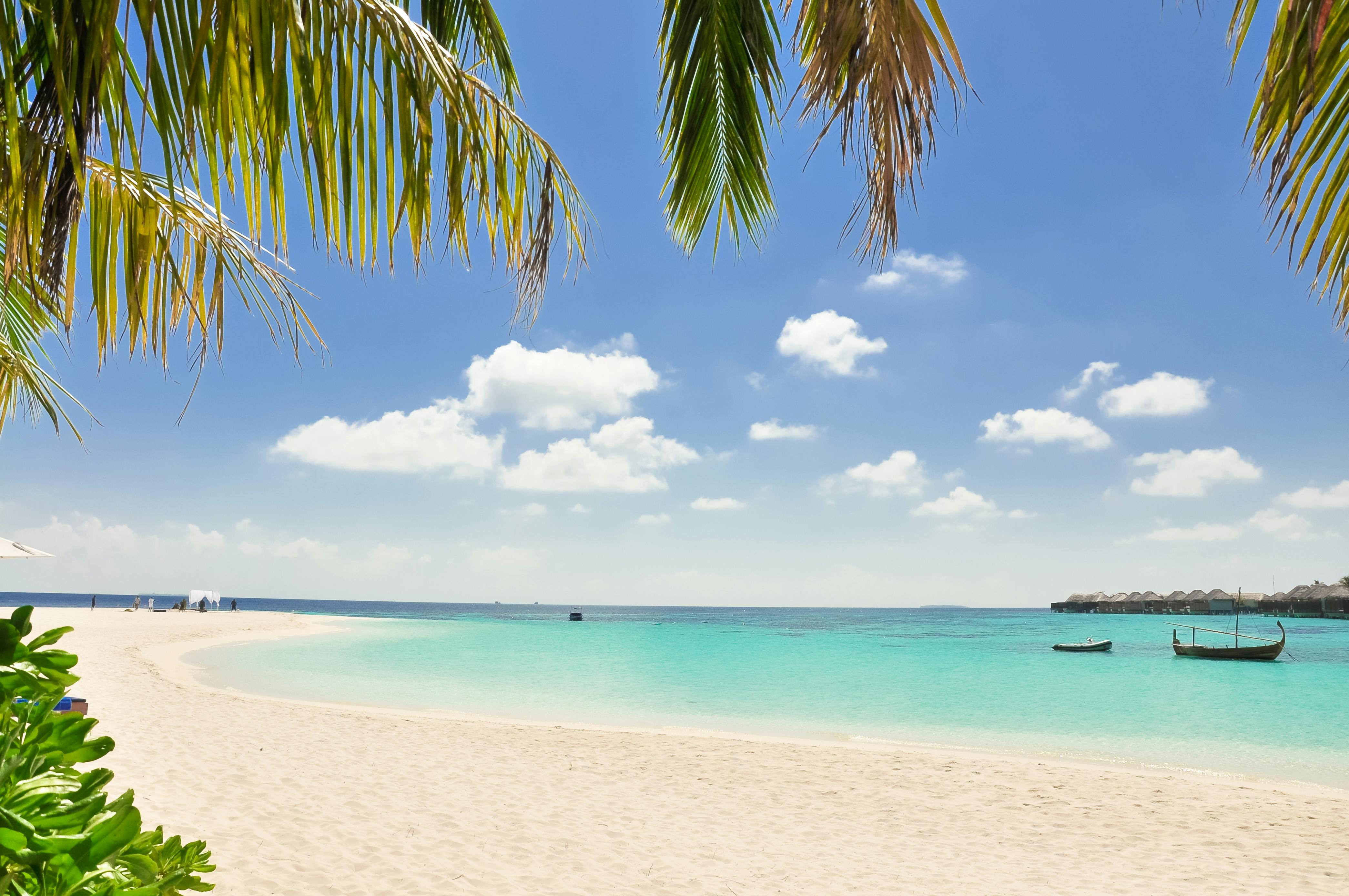
Fly from Manila to El Nido (1.5 hours) — the gateway to Palawan’s extraordinary limestone karst seascape. Palawan is a long, thin island in the western Philippines where the Sulu Sea meets the South China Sea, and its northern tip around El Nido contains some of the world’s most spectacular coastal scenery: hundreds of limestone karst formations rising from turquoise water, enclosing secret lagoons, hidden beaches, and coral gardens of extraordinary health and diversity.
Island hopping is the primary El Nido activity — day tours by outrigger boat (bangka) visiting a different set of lagoons, beaches, and snorkelling sites each day. Tour A covers the Big Lagoon and Small Lagoon (accessible by kayak through a narrow limestone crack), the Secret Lagoon (through a tiny cave), and Shimizu Island’s coral garden. Tour C covers Helicopter Island (so named for its shape), Matinloc Shrine (a ruined colonial chapel on a clifftop), and the Hidden Beach — accessible only by swimming through a narrow rock arch. Both tours are full-day experiences costing $15–20 per person including lunch. The snorkelling in these protected waters is among the finest in Southeast Asia.
The Puerto Princesa Subterranean River (a UNESCO World Heritage Site 5 hours south of El Nido) is the world’s longest navigable underground river — 8.2 km through a cave system of cathedral chambers, stalactites, and blind fish, emerging directly into the South China Sea. It requires advance booking and is worth the journey.
Day 5–6: Bohol — Chocolate Hills and Tarsiers
Fly from El Nido to Cebu (1.5 hours), then take the 2-hour ferry to Bohol — a compact island in the Visayas whose most famous feature is the Chocolate Hills: 1,268 perfectly conical limestone hills spread across 50 square kilometres of central Bohol, turning chocolate brown in the dry season when the grass covering them dies. They are geologically unique — formed by the dissolution of marine limestone over millions of years — and visually extraordinary: a landscape that looks designed rather than geological, its symmetry and regularity defying intuition.
Bohol is also home to the Philippine tarsier — one of the world’s smallest primates, with eyes proportionally larger than its brain, clinging to branches in the secondary forest of the island’s interior. The Philippine Tarsier Sanctuary near Corella is the only place to see them ethically — wild animals in their natural habitat, observed quietly from walking paths rather than handled or kept in cages. Additionally, the Loboc River flowing through Bohol’s jungle interior offers bamboo raft cruises past traditional villages and the Baclayon Church (1727) — one of the Philippines’ oldest stone churches.
Day 7: Cebu — First Contact and Heritage
Return to Cebu for the final day — the Philippines’ second-largest city and the site of one of history’s most consequential events: the arrival of Ferdinand Magellan’s expedition in 1521, the first European circumnavigation of the globe to reach the Philippines. The Magellan’s Cross (a Christian cross planted by Magellan on his arrival, now protected inside a chapel) and the Basilica Minore del Santo Niño (housing the oldest Christian artefact in the Philippines — a Santo Niño figure given by Magellan to the local queen) stand 50 metres apart in central Cebu, marking the moment Christianity arrived in Southeast Asia. The Fort San Pedro (1565) — the oldest triangular fort in the Philippines — completes Cebu’s colonial heritage circuit.
Cebu is also famous for lechon — whole roasted pig, the city’s signature dish and considered by many food writers the finest pork preparation in the world. Anthony Bourdain called Cebu lechon “the best pig I’ve ever had.” La Lut’s and CNT Lechon are the city’s most celebrated producers. It is the finest possible final meal before flying home from Mactan-Cebu International Airport.